
Forum Replies Created
-
AuthorPosts
-
January 9, 2014 at 12:57 pm #4985vhgmcbuddyKeymaster
Thanks to you all for your help and suggestions, I will stick to my original plan with the addition of etch primer.
January 9, 2014 at 10:56 am #4983vhgmcbuddyKeymasterAnything that excludes air and moisture has to be better than nothing . Not sure if I have read your post about galvo correctly but while being fine for steel it is unlikely to be beneficial for aluminium alloys.
My guess is that if money was no object a new bearing housing given a couple of coats of epoxy primer would be the way to go, but to get an existing housing clean enough fot that to be effective would possibly destroy it.
I put a new deck shell onto a little Husky for the brother in law down in Somerset in the summer and fortunately went armed with a pair of good used bearing housings as his were crumbling away to nothing.January 8, 2014 at 7:41 pm #4979vhgmcbuddyKeymastermanaged to get one together and will need to let the paint dry before applying a couple of coats of clear varnish just to seal the unit from rain etc. not that it will see much rain here as it will only be subject to an odd shower at shows.
Attachments:
January 8, 2014 at 7:33 pm #4978vhgmcbuddyKeymasterThanks Angus, I will try the grease plastered on, the waxoyl once a year works fine on the rest of the deck and has probably helped the spindle holders somewhat. One thing amongst all I read, that might tie in with your grease excluding the air. Was to paint corroded area with galvanise paint, that’s when it’s clean. Seeing there’s three of them I might try two with grease and the other with galvanise paint and see what they look like end of this season.
Thanks John. I thing the spindle holders wouldn’t stand up to separating from steel deck. All these things make it more interesting.
January 8, 2014 at 7:30 pm #4977vhgmcbuddyKeymasterOwen I have come across this problem many times especially on older range rovers. the rear window and tail gate are two separate items . now the tail gate especially has problems on the lower hinges and the customers commented that rust was appearing in that area. on speaking with land rover they told me that when alloy and steel are mixed,i,e like the hinge and door a electrical force traveling between the two causes the furriness as you describe. your deck will be a mixture of both products and the one way you can stop it is to isolate all contact points on the joining process. its just one of lifes irritating problems.
January 8, 2014 at 1:59 pm #4976vhgmcbuddyKeymasterI seem to remember being told that the initial layer of oxide/corrosion would protect the underlying metal from further deterioration . That was the theory but in practice it does seem a bit different.
That said, the acids produced by a damp poultice of festering grass (and worse!) does seem to have the ability to corrode things like spindle housings to the point of destruction. “In season” in practical terms there is not a lot that you can do – weekly under deck hosing or pressure washing is not only a messy operation but can have undesirable effects to bearings etc.
Out of season with a dry deck I would suggest dry cleaning with a scraper and stiff brush (not wire) to clean off the crud but leaving the oxide layer and then give the housings a heavy coat of a waxoyl type product or heavy grease to exclude air.
When I was in business we used to coat the underside of “winter service” decks with “soft grease” -a brew much loved by the military back in the 50/60s for coating the underside of “mothballed”equipment and made by mixing heavy grease and engine oil and stirring to a semi fluid consistency and liberally applying with a wide paint brush. Our lubricant supplier used to offer us dented and damaged drums of grease at an acceptable price!January 7, 2014 at 8:31 pm #4973vhgmcbuddyKeymasterMark. do not want to sound harsh here,but we all start on this level and with the help of good experienced people on here we learn to fix then gradually. I find that when I have completed a project its a big achievement,and I am sure that you just need a hand and you will never turn back if you have an interest in old horticultural equipment. Give it a go its not hard. john.
January 7, 2014 at 8:13 pm #4969vhgmcbuddyKeymasterMade a positive start on the home made wood hand grips and what I have done is traced around the two halfs on each side of metal bar as a guide when grinding down. when satisfied glue the two pieces to the steel with Araldite Rapid. I have tried two different ways as shown to apply a bond.
0nce we have a bond on both handles, filling with wood filler in certain places will be followed by sanding etc including any fine alterations to metal work and making the feel by hand comfortable.
Attachments:
January 7, 2014 at 7:35 pm #4968vhgmcbuddyKeymasterIt’s a Ginge (pronounced Gingah) came in two widths and had a plastic grass collector under the handlebars. Not many collectors have survived as they were prone to uv deterioration, brittleness and disintegration! I’ve got one minus collector that my Dad bought around 1960 and the local Antiques Centre (junk shop) had a complete one a couple of months ago – I resisted the temptation!
At present they have a Webb Witch with high cut side wheels and no front roller. Never seen a roller driven Webb push mower with high cut wheels but they look original and not a diy adaptation.January 7, 2014 at 7:20 pm #4967vhgmcbuddyKeymasterSorry Phil, just checked my literature collection and the book 70 Years of Garden Machinery, no joy I’m afraid…
January 7, 2014 at 8:30 am #4962vhgmcbuddyKeymasterThis is the G 28 engine strait through copper exhaust. I tried removing the stud that had been welded to but eventually had drill it and re thread it.
Attachments:
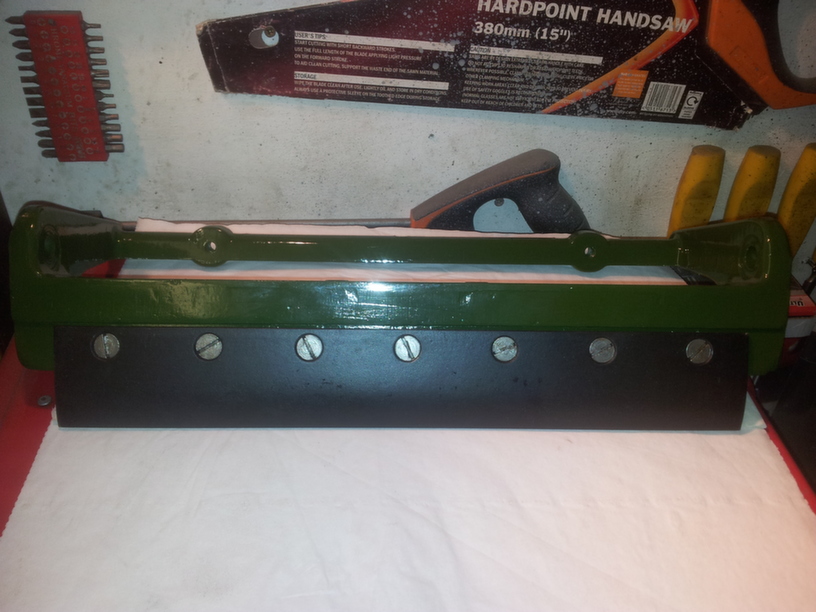
January 6, 2014 at 11:01 pm #4960vhgmcbuddyKeymasterAlso had a little parcel waiting for me when I got home today, The new bottom blade and screws from Garfitts. Thanks for putting me onto them ‘Wristpin’
Attachments:
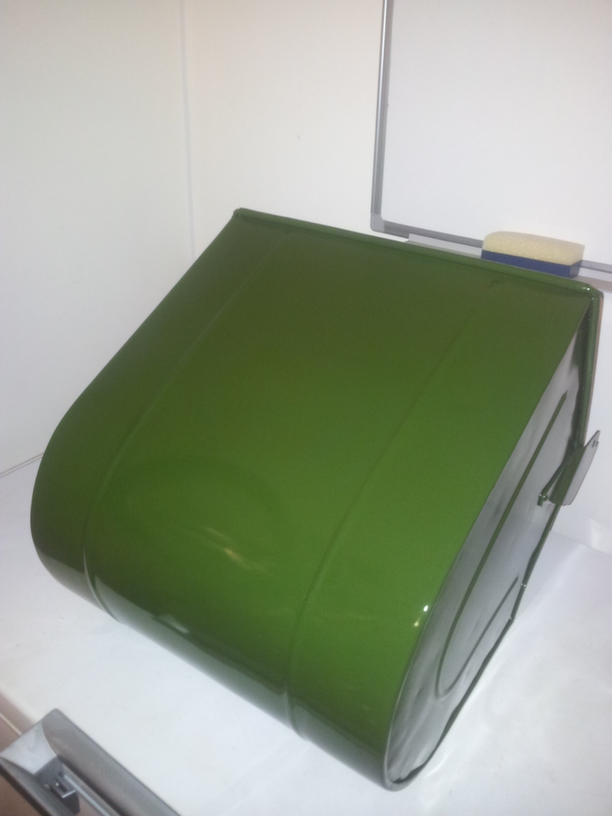
January 6, 2014 at 10:57 pm #4957vhgmcbuddyKeymasterCant help but look at the grass box each time I go in the garage and smile!
Just need to contact ‘Titch’ and ask about some of his fantastic decals.Attachments:
January 6, 2014 at 9:37 pm #4952vhgmcbuddyKeymasterpps just had a word with rob and he recons its a EJ
January 6, 2014 at 9:36 pm #4951vhgmcbuddyKeymasterIts a secret the way of the world dictates this you know where im coming from.
-
AuthorPosts