
Forum Replies Created
-
AuthorPosts
-
September 15, 2025 at 2:38 pm #44125vhgmcbuddyKeymaster
What fuel would I use in the 28B engine instead of modern petrol with bio additives?
Ian.
August 31, 2025 at 9:30 pm #44073vhgmcbuddyKeymasterVery sad news. I bought Geoff’s Trusty books only relatively recently, and he left me a kind note inside one of them. Moreover he always gave a detailed and knowledgable answer to my questions on this forum.
I am sure he will be missed. My thoughts to his family
August 26, 2025 at 11:06 am #44025vhgmcbuddyKeymasterThanks Andy. I have zero experience with farm machines, but decades of servicing motor and pedal cycles behind me. I suspected I knew the answer to my question and was seeking confirmation of my suspicion – which you have given. Only decision now is whether to do the work myself or pop the gearbox in the boot and take it over to someone who knows what they’re doing! 😉
August 21, 2025 at 12:33 pm #44010vhgmcbuddyKeymasterThat is indeed sad news. He helped me greatly with queries about Trusty’s and I shall miss his sound advice. His enthusiasm for Trusty’s shone through with everything he said to me. Can I offer my condolences to his family and friends.
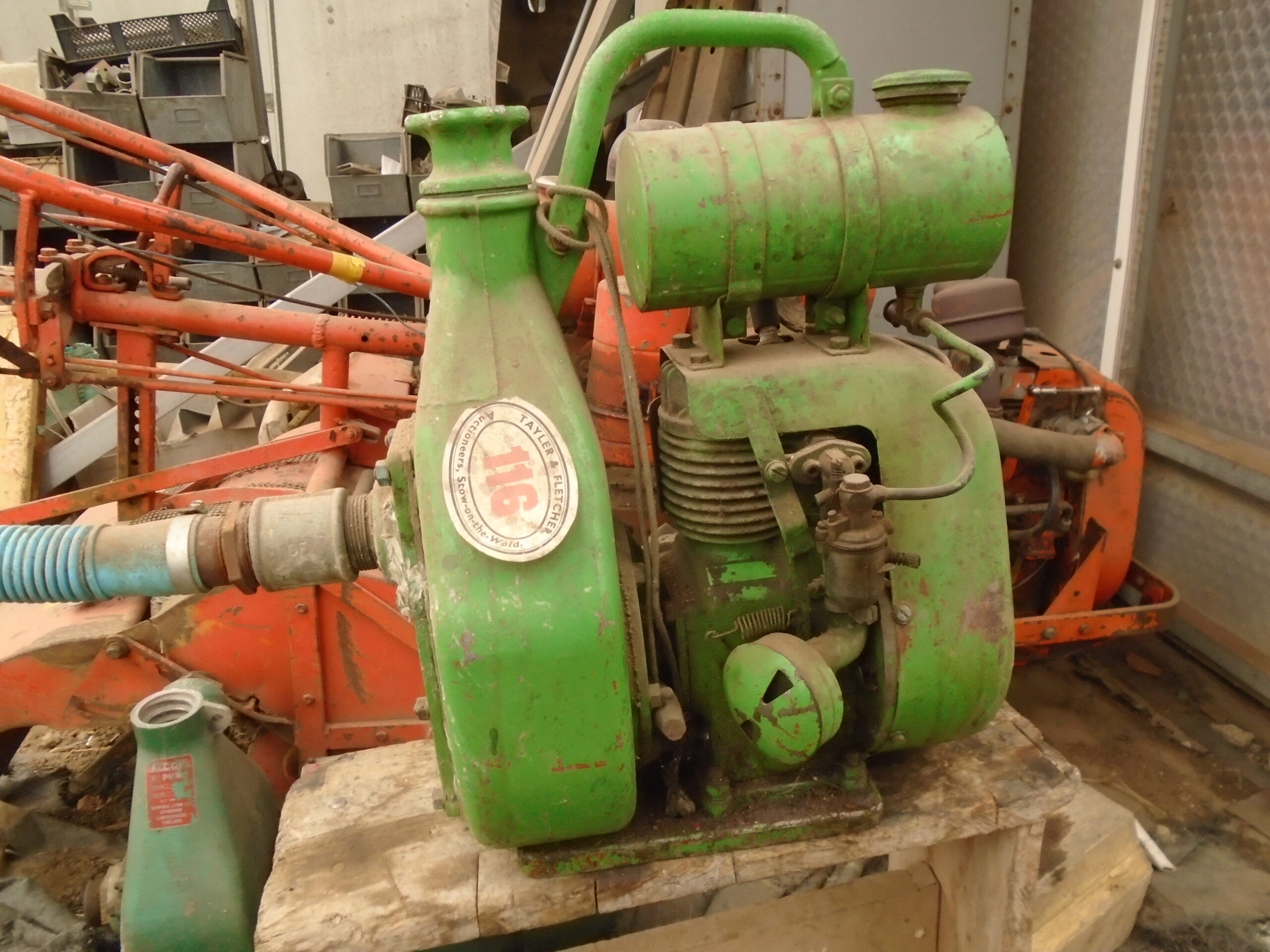
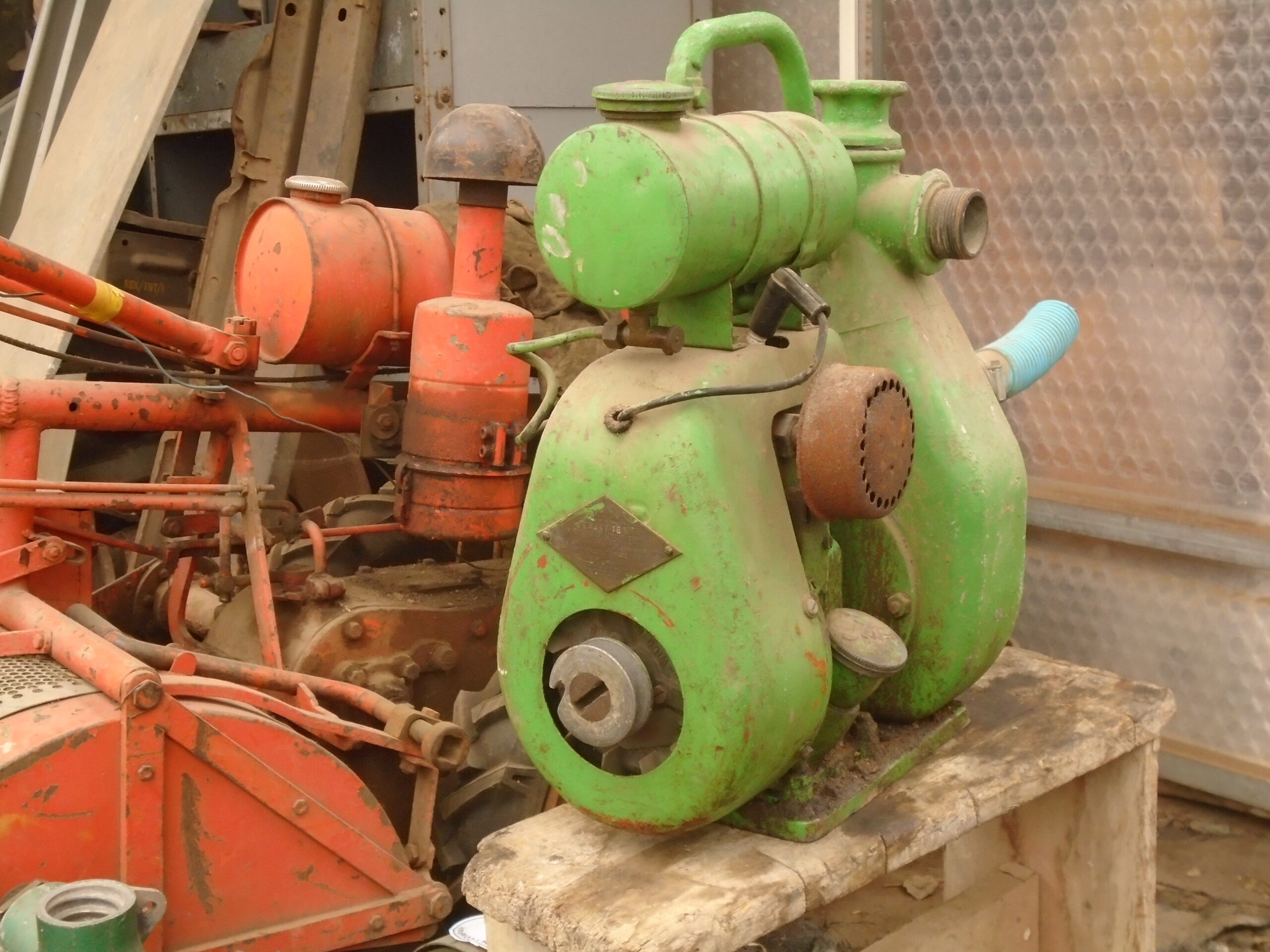
August 18, 2025 at 11:29 am #43994vhgmcbuddyKeymasterÚgy tűnik, elfoglalt dolgod lesz. Remélem, sikerül mindegyiket szépen működésre bírnod. A képen a téli projektem látható, egy JAP 2a, ami egy Alcon vízpumpára van szerelve, és máris jól elkezdtem. Épp most fejeztem be a szelepek becsiszolását, és most már elkezdhetem az egészet összerakni.
Attachments:
August 11, 2025 at 5:51 pm #43986vhgmcbuddyKeymasterWow thanks for that, i will keep my eye open at our loca sales you often see various slitters that could be adapted. Will also keep an eye out for a roller
August 11, 2025 at 8:48 am #43983vhgmcbuddyKeymasterThank you, that was brilliant, l assume the optional slitter and roller attachments fitted on the back in lieu of the rake /brush, to change the spikes each time would have been quite a chore?
Well l start this morning in restoring mine, the “peristaltic” (thats a mouthfull) pumps appear to be okay but l was of a mind to use a winscreen washer pump. Will put up photos later
Thank you againAugust 7, 2025 at 5:58 pm #43975vhgmcbuddyKeymaster@plowmate Did you ever find a replacement for the external lip seals for your Motocart brakes?
We have a Motocart that uses the same the same part number EC300128. It seems external lip seals, with a press fit on the shaft, are much more difficult to find than the usual type that press fit into the housing.
August 6, 2025 at 6:10 pm #43972vhgmcbuddyKeymasterCan they be registered to go on the road?
-
This reply was modified 1 year, 3 months ago by
 charlie.
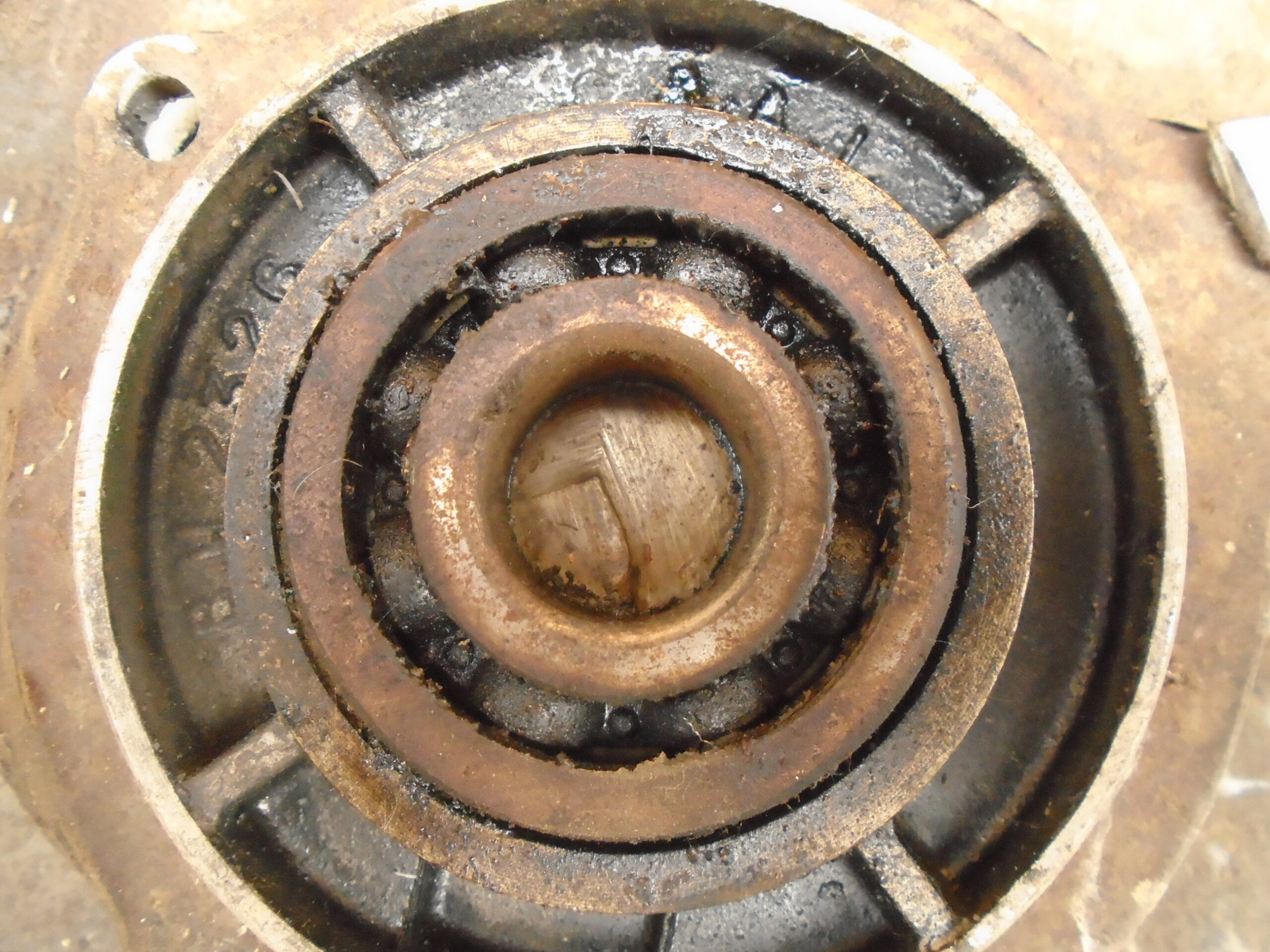
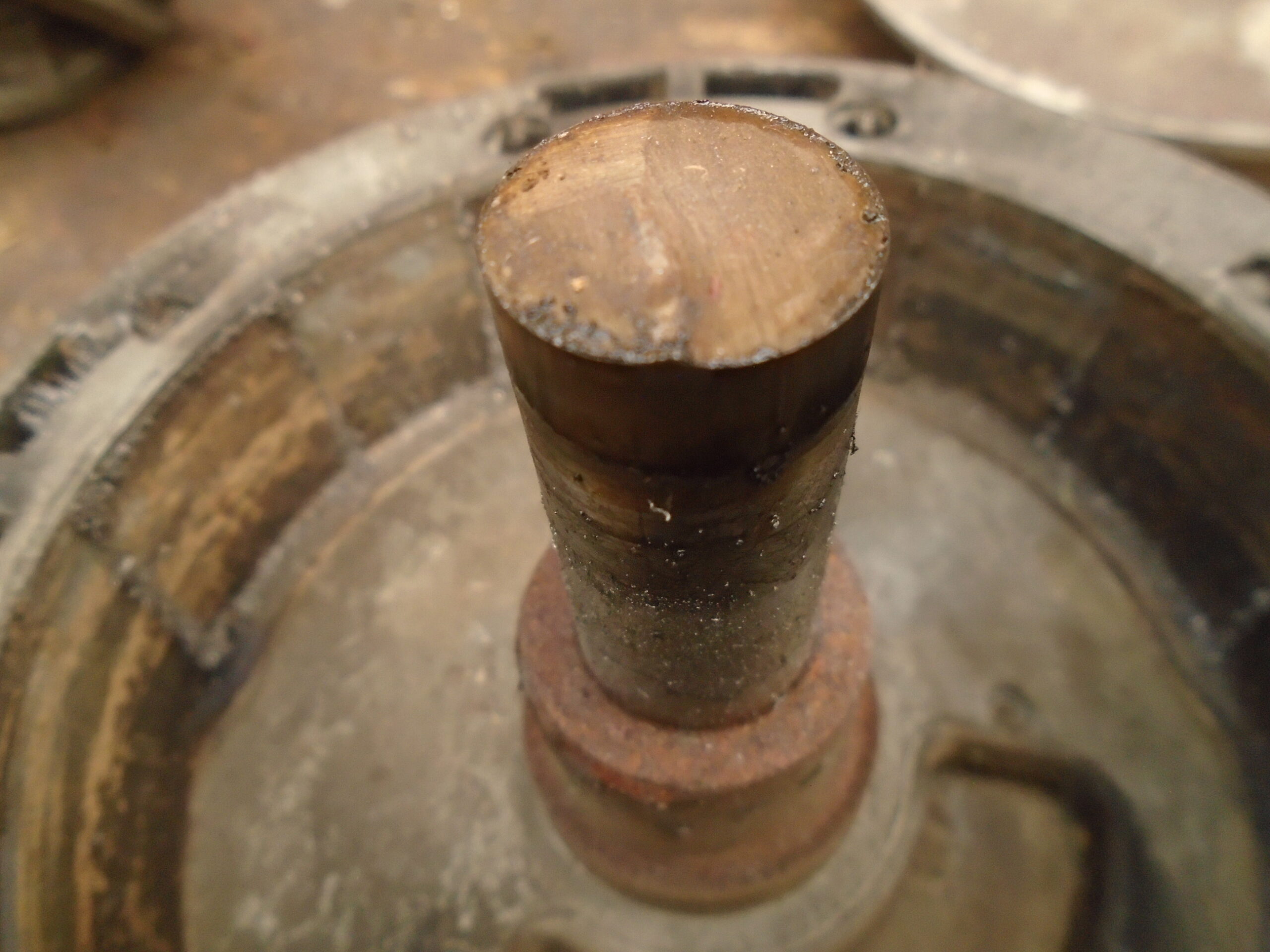
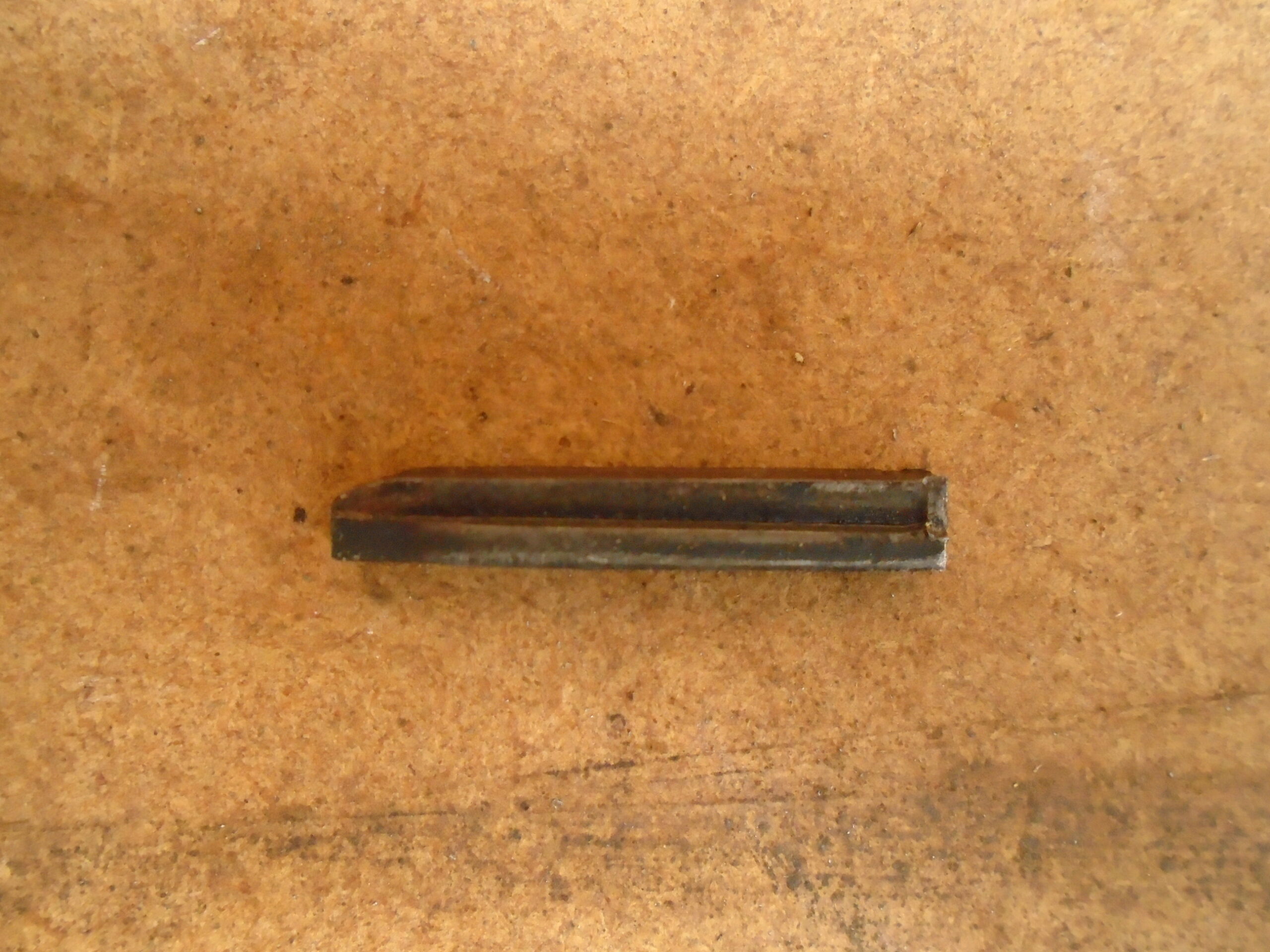
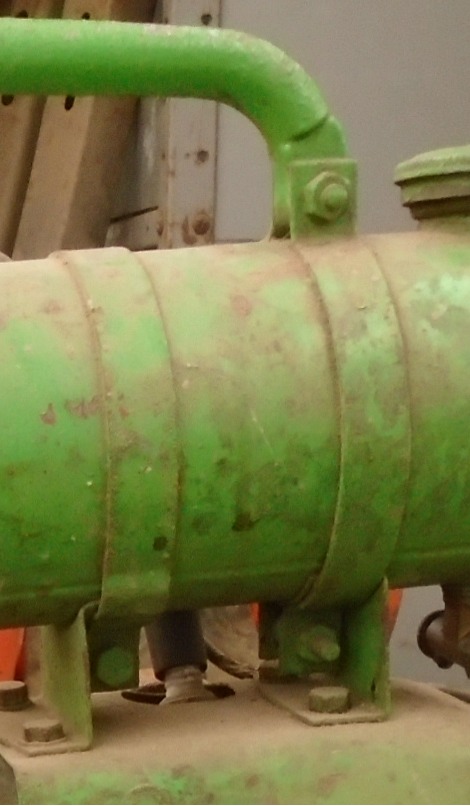
July 31, 2025 at 10:19 am #43963vhgmcbuddyKeymasterHere are the photos of the sheared Villiers pump crank after a stone came through the suction hose and locked the impeller. Also the 2a grooved key and a cropped image of the bolt threads showing the original paint on them.
The clean cut on the crank vividly demonstrates what can happen when an engine suddenly stops stone (pun intended) dead and the energy created by momentum of the reciprocating parts has nowhere else to go.
Once got a mixer for it’s drum, my old one had started to rust through. The mixer had a Briggs & Stratton engine that would fire, but not run. Was not bothered, as I had a rescued Honda to fit on. But when I had 5 mins free thought I would get the B&S going. But no go, I subsequently revisited it a couple of times, could not understand why a nearly new engine with good compression, a big fat spark and fuel would only pop and bang for a minute or so. Decided to take off the flywheel to check the ignition timing and the alloy key had half sheared. The drum had stopped suddenly, the flywheel still was able to move and it probably saved the engine. It now runs as sweet as a nut, but have it stored away with no use for it. Have been told to always fit a genuine B&S alloy key, never a steel one.
Have a Clifford Mk1with a Villiers 25c. I re-fitted the flywheel using only light taps on the T bar of the socket and glad I did. When using it I hit a stone that stopped the engine and moved the flywheel on it’s taper. Otherwise the 25c crank could have sheared. My Howard Gem has a pin in the shaft from the clutch that is there to shear if the rotors stop suddenly. Some plough and cultivators have shear bolts too to protect the implement. The grooved key and roll pin follow the same principle.
The paint of the threads should put to bed any thoughts that this engine had had it’s cowl off (and by extension the flywheel), since the day it left the Alcon works in 1951/2. A further inspection revealed the felt behind the stator plate, although I fail to see the relevance of it. The roll pin and grooved key are factory modifications most likely done at the JAP works in conjunction with Alcon. It could be a one off, or part of a small batch, who knows. The grooved key is designed to shear and the roll pin that prevents the pulley from being tightened hard against the flywheel, will let it turn if the engine stops dead. Better a sheared key than a sheared crank. On a portable pump used by ill informed operatives, a solid steel key I would describe as a “recipe for disaster” a sheared crank “untold damage”. The roll pin only has to resist against it’s own rotational inertia force whist the engine is running and the action of the starter rope from static. Not much. It’s primary purpose is to prevent the pulley going tight against the flywheel, so it is free to turn if the key shears.
This will be my last post on this subject (JAP 2a flywheel removal) until I have got the engine running. Am not going to descend further into a ding dong battle on this forum about whether the roll pin and grooved key are factory modifications, or a bodge by a mechanic, or the merits or otherwise of a key and pulley arrangement designed to shear. Nor does the fact others may not have seen such a set-up before. In the grand scheme of things, it makes no difference anyway. The important thing is to take care with the re-fitting of the flywheel to ensure the crank does not move over, everything is correctly aligned, there is no resistance or rubbing. It will be during this assembly process when a final decision will be made whether to tighten the pulley against the crank, or re-fit the roll pin. Current thinking is I am attracted to the idea of maintaining a shear capability due to my own experiences and observations. Also would like to put it back to the same specification it came from the factory. Want to use the engine as a test bed for an energy transfer coil conversion. It may have a use for it as an irrigation pump for my Evenshower oscillating spraylines, but it will need to demonstrate comparable fuel efficiency with my existing modern pumps. Being brought up in the market gardening industry it was drummed into me that a strainer should ALWAYS be used on the suction hose of a pump because if it sucked up a stone it would wreck the pump set. I still think the roll pin and grooved key were a factory modification to trial the idea of introducing a shear element into the design. But was quickly dropped, probably due to the cost. If others take a different view, I am totally unconcerned and will move forward with working on the engine as I see fit.
Attachments:
July 23, 2025 at 8:41 am #43950vhgmcbuddyKeymasterH7 is a transition fit, where it’s not a sliding fit, but not a press fit either. The flywheel should fit over the shaft and come off again with very little effort. But have some resistance to rotational turning.
There was no felt seal around the edge of the stator plate.
Believe the engine cowl has never come off since it left the Alcon works. So anything that is unusual was done by the JAP factory or possibly Alcon. The steel key has two grooves either side of it, so was designed to shear if the engine stopped suddenly. Modern engines have an alloy key that does the same. Have you or David seen keys like that on a 2a before, because I have not. Could be that the roll pin mod was specified by Alcon, but only for a short while. If the pulley was tight against the flywheel, the key would not shear as designed. Will take photos of the key and the sheared Villiers crank that I have mentioned in a previous post. That was broken by a pump sucking up a stone.
July 23, 2025 at 8:39 am #43949vhgmcbuddyKeymasterRemélje, hogy teljes visszatérítést kap a kézikönyvért. Ha bármiben tudok segíteni, csak kérdezz. Tagja vagyok néhány Facebook-csoportnak, a tagok gyakran kínálnak kézikönyvek pdf-változatait, hogy segítsenek egymásnak. Postázhatnék valamit, de a motorok ritkák ebben az országban, úgyhogy szerintem nem sok van a kézikönyvvel. Kipróbálhatnál egy másik kezdő témát a VHGMC fórumában, de angolul küldenéd. Nem minden tag tudna számítógépe segítségével magyarra fordítani.
July 22, 2025 at 3:25 pm #43945vhgmcbuddyKeymasterSok sikert a javításhoz, és remélem sikerül újra rendesen működnie. Nincsenek brosúrám a Tecnamotor motorokról, ezek nagyon ritkák az Egyesült Királyságban. Ne is gondold, hogy láttam egyet. Köszönöm szíves prospektusajánlatát, de csak az általam birtokolt vagy dolgozni fogott motorokról van és kérek információt. Tartson naprakészen minket a motoron végzett munkával kapcsolatban.
July 22, 2025 at 3:17 pm #43944vhgmcbuddyKeymasterAm thinking very much along the same lines. The pulley should be done up tight against the flywheel, the roll pin prevents that. There is a strong possibility that if it is pulled tight it will pull the crank slightly towards the flywheel end. Am going to grind in the valves, so the stator plate has to come off. Will also get the deposits in the flywheel hole and shaft flattened off so I can get near to H7 h6 or js6 in the Limits and Fits tables. Should then be able to put the flywheel on and off relatively easily and see where the problem lies. Can try it with the roll pin and without, tightening the pulley. I think this is a factory bodge and if so, it was done for a reason. It could have also been a method to prevent over-tightening by ham-fisted ‘mechanics’ after the matter was raised. It could have been only done for a small production run, then decided to drop the idea. All I do know is that I do not want to damage an engine that has done little work from new.
July 21, 2025 at 9:44 pm #43939vhgmcbuddyKeymasterIf using Windows on a PC, the default program will have a slider in the bottom right hand corner of the monitor with a – on the left, a + on the right. Move the slider to the right to zoom in. Alternatively, with the mouse cursor over the image, roll the mouse wheel up, away from your hand.
The roll pin is actually 3off, 2 larger ones and a centre spacer that is in the middle of the crank. Was going to not use them, but now am having second thoughts. After reading what David wrote, they could prevent the pulley pressing tightly on the flywheel because of a machining error on one of the associated parts. Rather than throw the batch away, fitting a roll pin was a more economic (bodge) solution. The ‘corrosion’ could be a type of loctite to prevent the flywheel moving in and out on the shaft. Am not sure about this. Going to grind the valves as I think this is the cause of the lack of compression, the seats look terrible because of years of storage with the valves open. When I re-assemble, will try to work out why the roll pins were fitted.
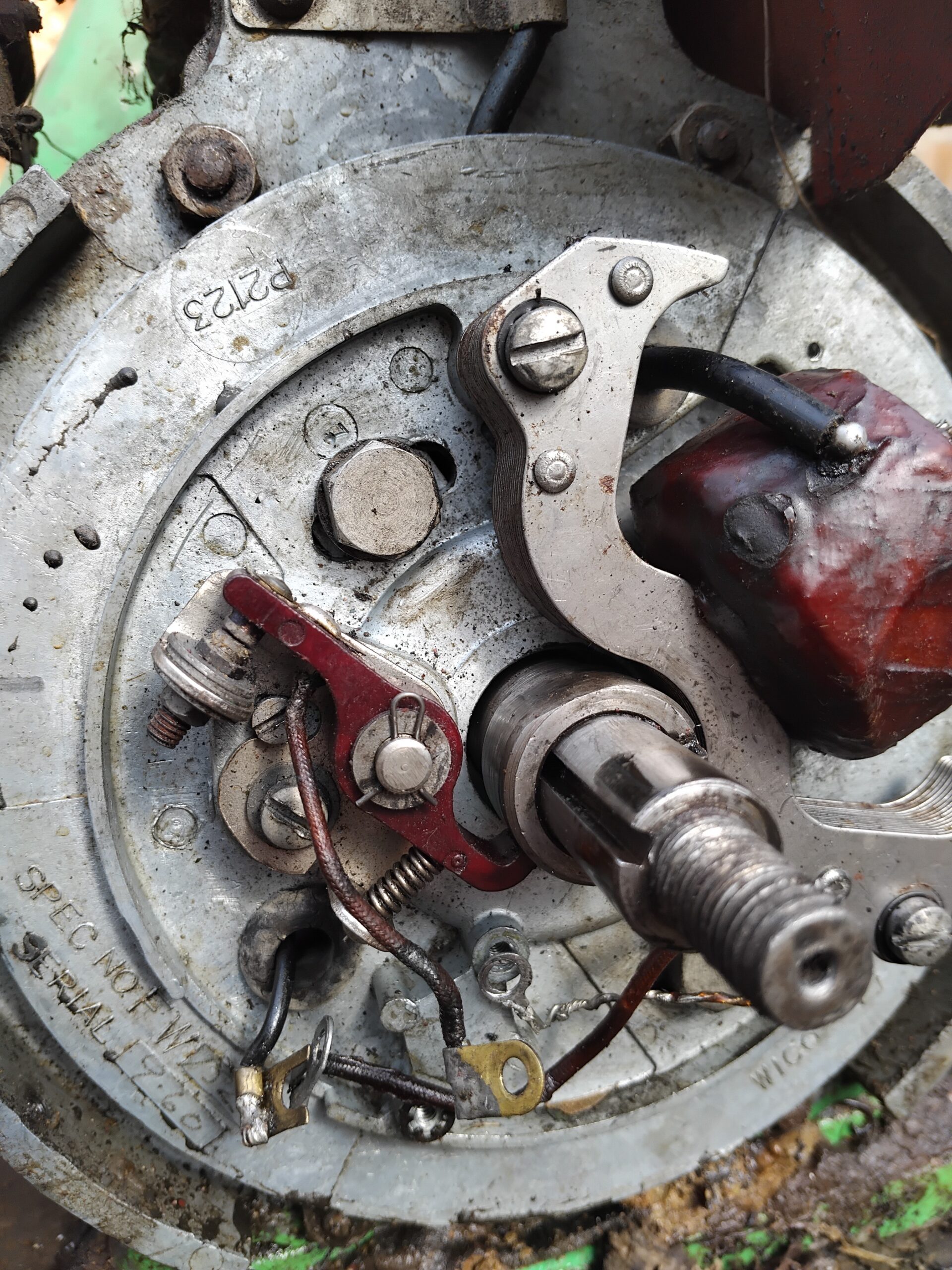
Have a 2a on a Colwood that I have had and used for 30+ years. The info I got all that time ago was the points gap is 0.018 – 0.020”, timing 30o BTDC. Have taken a picture of my points set-up and it looks the same as David’s. Believe mine has not had the cowl off since the day it left the factory, so it’s original. Can alter the timing by moving the armature backplate on the slots as shown in the photo. As the cam for the points is separate from the flywheel, can set the timing with the flywheel off. But expect it to be spot on as there is so little wear on the engine. Do not think it has done more than a few 10’s of hours since 1951.
Really pleased to hear Andy was approving of the external energy transfer coil trial. If it works, it should cost £25 max for the first one and £10 for the next 6 as the 125g roll of enamelled copper wire and a roll of heat resistant polyester tape will do several primary coil windings. Can get an external coil for under £6 if it purchased via Temu. It could save some old engines because it is so cheap to do.
Attachments:
-
AuthorPosts