Forum Replies Created
-
AuthorPosts
-
March 31, 2022 at 4:19 pm #38750hdtrustParticipant
Good afternoon Angus, yes mowers before your time! The machine above had a total loss system, the oil went via a pipe to a cup box feeding the bearings on the rear roller.
The reasons for changing the width of the cutting cylinders, was because of flex from the cylinders to the bottom blade. Atco’s construction was always lighter, then their counterparts eg Ransomes.
Infact I’ve often heard in the trade that Atco after the war could never produce a professional machine, but I will leave that one for others to argue the toss!
Regards
AndrewMarch 21, 2022 at 10:05 pm #38677hdtrustParticipantHi
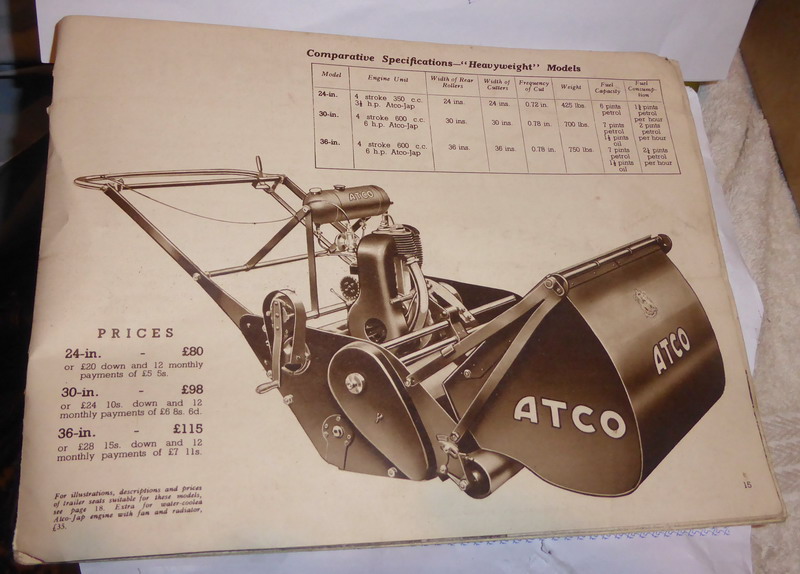
What you have there is a pre war Atco, your model was made from 1939, there was three sizes in the range, 24 inch, 30 inch and 36 inch machines, the range was actually called the Atco Heavyweight range
They were designed for extensive areas of grass on large estates, cricket, football pitches and playing fields. Yours had the capability of cutting up to 1 acre per hour.
The engine is an Atco-Jap 4 stroke 600 cc.Which had a mechanical oil pump, Amal carb and a Wico magneto, and a fan cowl cooling system. The rear roller is split into three, which has a full differential drive for easy turning.
The cutting cylinder should be six bladed, and there is a cutter release which enables the machine to run without the cutting cylinder engaging so the machine can be used to roll only.
The front rollers should be in 5 sections made of cast iron, very heavy. As can be seen in the picture which is from the Atco 1939 brochure, the grass box sits within a frame so that when emptying, it tips forward.
The finish on this range of machines included chromium plating on the exhaust pipe, handles and controls.
Hope this helpsAttachments:
March 13, 2022 at 9:05 pm #38662hdtrustParticipantHi Collin
Just been looking at the Gamage’s roller, OK Gamage’s sold this roller with their name on it, like a lot of Ironmongers did, Allan is quite right T Greens of Leeds did make many garden rollers under their own name and others, the termination for this type of implement selling is and was called catalogue machines.
However in this case, Green’s did not make rollers for Gamage. Infact there was a society which evolved within all the different manufacturers of garden rollers.
It was Qualcast of Derby who made the Gamage roller, now with the history laid to one side, let me try and sort your problem out!
The reason why your roller is ceased, at some point it has been left outside in the elements, where water has got into the journals where the axle is, now what you cannot see from looking at it at the moment is what is inside. Your roller has two castings that you can see, the idea is as you turn a corner, they should independently rotate different ways on that axle, where they will be ceased is in the middle, as well as slightly on each end.
What you do. First remove the handle from the two bolts on either side. Then you need to make a cradle on the ground of say two concrete blocks of at least 6 inches high, place a timber plank on top (to cushion) then place the roller on its side on top so the axle is clear of the ground.
Now the axle on the top can be worked on, there are many ways to do this, but to help free the journal pour diesel around the axle and leave for a couple of days, What I have done in the past is to heat up the side axle bracket with oxygen and propane, there is a bolt which fixes it to the axle which needs removing, with heat that then can be removed, which will open up your way to the journal, if you need to add pressure or shock by using a hammer only do it by hitting the axle and only then with a piece of wood between your hammer and the axle. do not hit the casting! A couple of days should free it, then once you get the axle out keep it well greased on replacing it. – best of luck.
Regards
AndrewMarch 7, 2022 at 11:14 pm #38647hdtrustParticipantIf my suspicions are correct you are known as Moorcroftman and the grass box you are having problems with are for a Ransomes Ajax!
Please be aware metal sheeting which this box is made from can age harden, so where possible heat should be applied first, this can be with a simple blow torch or if your workshop is better equipped a oxy-acetylene kit with a rosebud torch. When warmed you can use the round end of a ball pain hammer, and place the box on anything hard, as long as its the same shape as your finished box. OR use a panel beaters maul behind. Hitting it can stretch the metal so be careful, if a crack appears, its best to braze the area, as welding could do more damage if heavy handed by burning a hole. If however you find it too difficult, then look for a company that does ducting work, ask them nicely or offer them a drink!
After writing this I could do with a drink as well!!!
Kind regards
AndrewMarch 6, 2022 at 3:19 pm #38644hdtrustParticipantYes it appears you are struggling, then lets try another way, which mower did your grass box come from? What material is it made from where the dents are?
Just trying to help
Regards
AndrewMarch 4, 2022 at 9:44 pm #38629hdtrustParticipantHi
How about adding some photos of your problems as there are many ways of fixing your problems depending on the degree of the dentsFebruary 25, 2022 at 10:46 pm #38611hdtrustParticipantAm I seeing double, or have I just read this post somewhere else?
Obviously you have not taken heed to what Wristpin has told you, he’s a good man, its worth listening to him.
Regards
hdtrustFebruary 25, 2022 at 10:35 pm #38610hdtrustParticipantDear Hortiman,
Treasure can come in all forms, to include Horticultural items, Evesham is a good place to look, but good treasure will never be left on the surface. Only last year we found an early Simar of 1919 – 1920, complete except for the engine missing. The year before we turned up a 1900’s Greens Silens Messor from 1900 in Malvern.
The best places to look is where the Horticultural belts were in the past but have long since gone, try Hertfordshire which in the 1920’s was known as the sea of glass!
Kind regards
Big EarsFebruary 13, 2022 at 9:09 pm #38565hdtrustParticipantHi
You appear to be in look, your Qualcast is a post-war Qualcast 16 we have a spare machine ideal donor for your rear roller.
The Ajax can be sorted by us as well very easily
Kind regards
AndrewFebruary 13, 2022 at 8:52 pm #38564hdtrustParticipantYou would be pleasantly surprised to hear more have survived and are stored in a cave owned by a Mr wallingfield in deepest Somerset.
I heard it on good authority
Big EarsJanuary 22, 2022 at 9:16 pm #38490hdtrustParticipantDear Jeremy,
If you have the original its quite easy, look up on google to you nearest belt distributor, there are many in most towns, they will be able to measure it correctly, failing that, if you have not got a belt, you need to measure, the length around the pulley wheels, I find it best using washing line. also measure the internal width of the pulleys, from there take the measurements to the same distributor
When you have done that, I always buy a spare, for the price its not worth the heart ache of another breakdownRegards
AndrewJanuary 21, 2022 at 9:36 pm #38485hdtrustParticipantHi Angus I see what you mean.
Well just come back from looking in all my Atco files to include non lawn mower. Although that Albion gearbox is present as its not attached in anyway, does it actually belong?
The Atco tractor’s engine was a 350 cc but that was different to this engine, as it was a two stroke.
I have checked all the Marine engine impellors they made and its not one of them either. Where the magneto is it is the correct position for a lawn mower engine, so all I can say is back to you.
Regards
AndrewJanuary 21, 2022 at 9:12 am #38482hdtrustParticipantHi Angus
I think you will find the original seat for the Webb 24 inch was by Terry, but you are correct on Anzani
Best Wishes
AndrewJanuary 20, 2022 at 11:29 pm #38478hdtrustParticipantHi Kurtis
Sorry for the lateness of my reply, as its our busy time at the moment pruning the apple trees through Somerset!
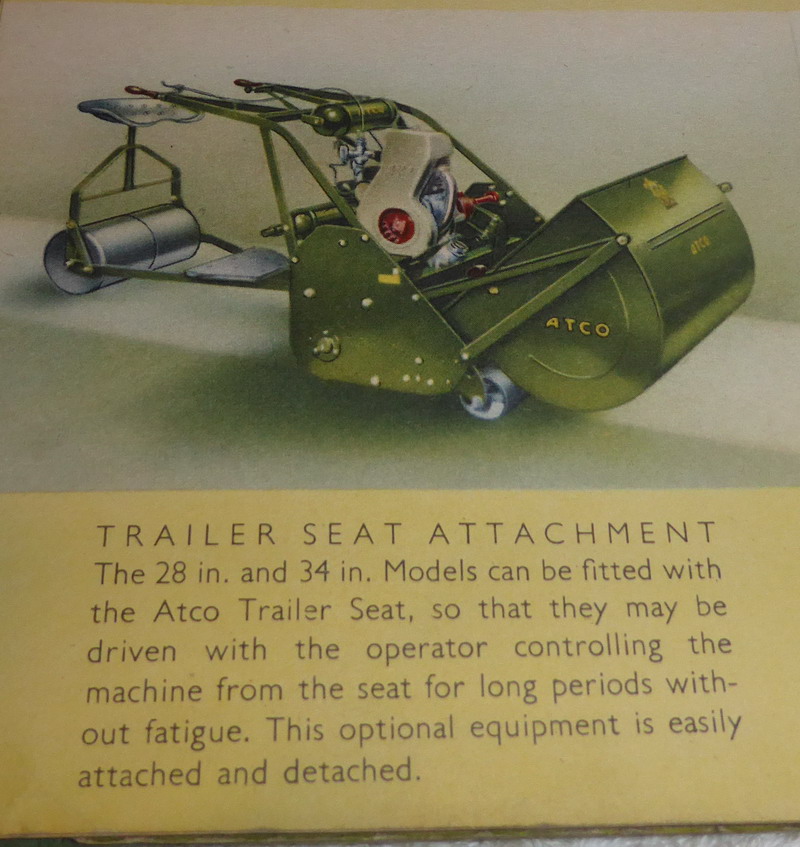
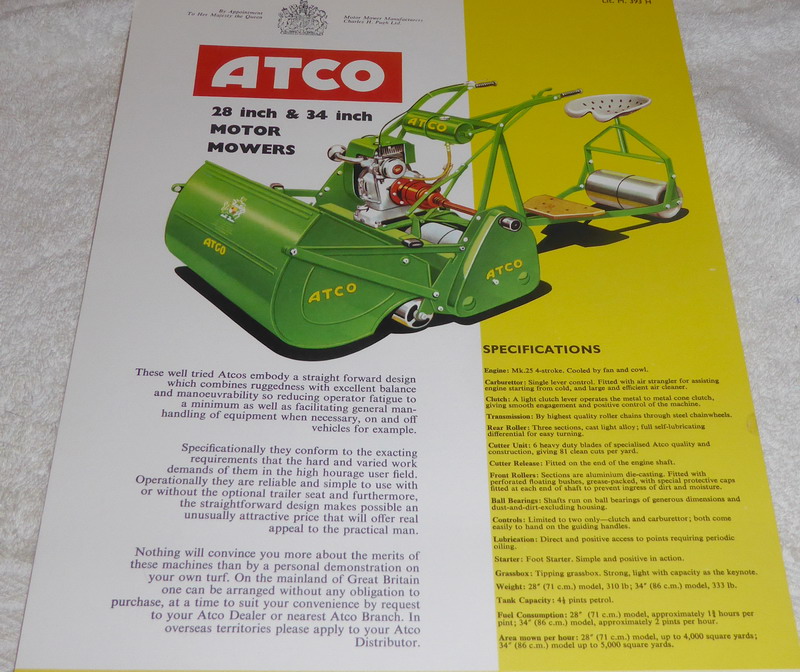
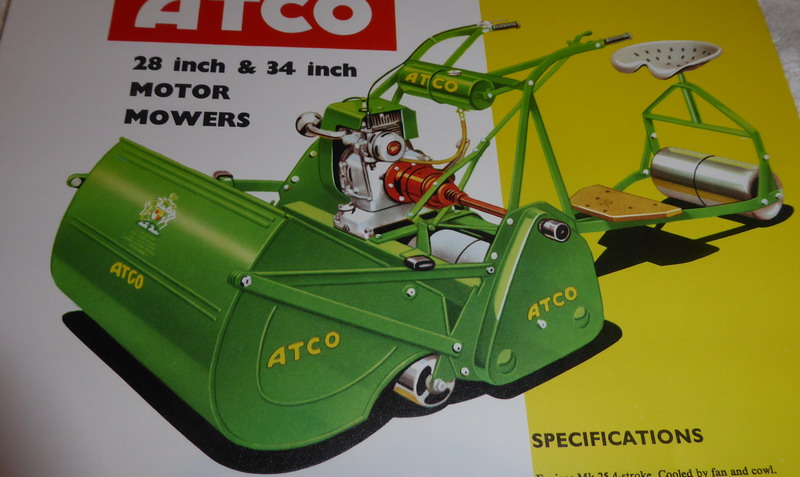
The engine dates from 1947 – 1953, you are correct a 350 cc. This engine unit was a side valve Atco/JAP four stroke with cooling fan cowl.
The carb should be an Amal, single lever control, fitted with air strangler.
Magneto should be a Wico series A
The starter should be by your foot, on to a lever, which should be attached to the clutch.
Hope this helps.
Photos from The Hall & Duck Trust LibraryAttachments:
January 20, 2022 at 11:12 pm #38475hdtrustParticipantNothing like a picture to help, try these two for size. They are from The Hall & Duck Trusts library – enjoy
Regards
AndrewAttachments:
-
AuthorPosts