by alan

Canal & Towpath Tractors

December 5, 2018 in Machinery

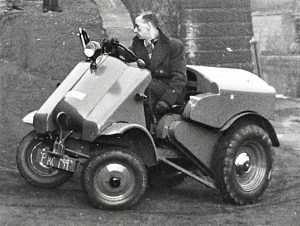
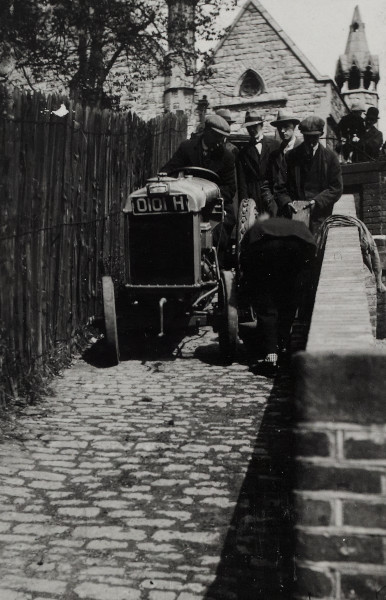
Recently there’s been an interesting forum discussion about light tractors which were used on the canal towpaths in the 1950’s and 60’s. There were various tractors including the Wickham tractor, David brown 2D towpath tractor and the Garner tractor. 

The whole thread can be found here and if anyone has any more information then please contribute. 


Garner tractor on a canal towpath


A modified Fordson as a canal towpath tractor

by alan

Recycling Machinery

October 27, 2018 in Articles

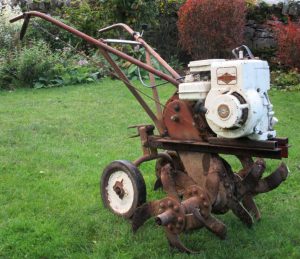
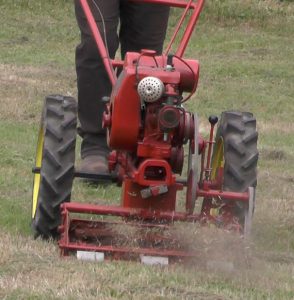
A Merry Tiller of many parts, including an engine built from three – inc a change of crank and piston. Wheels off a Landmaster mower, throttle from a Wheel Horse.

Horticultural equipment collectors are, in my opinion, quite good at recycling in order to keep their hobby rolling along. One only has to look at a collector’s spares heap or the garage workbench with the aroma of WD40, a line of jam jars full of ‘important bits’ and some paper towels surreptitiously purloined from the kitchen to see how much repairing, sharing and salvaging of machinery parts goes on.

As an example; these past few weeks I’ve brought a Merry Tiller back to life (image on right), it wasn’t so much as a kiss of life it needed but more of a whole heart and limbs transplant. It’s had so many parts from a large array of expired machines that I’m sure Frankenstein couldn’t have done a better job, but the Merry Tiller runs, it lives to fight another day even if it no longer resembles the picture on the 1970’s brochure unless one squints a bit, thankfully the Merry Tiller admirably battles on to do the job as it was originally intended to do.

But instead of all the old machinery that we collect, restore and patch-up there is a huge amount of new and temptingly cheap machinery on the market. I could of splashed out 169.99 of my sacred Yorkshire pounds and bought a new knock-off Merry Tiller, but I wouldn’t have had as much fun, besides guilt would have set in too. Yet I’m sure we’ve all noticed cheap-as-chips mowers, tillers and hand tools in DIY stores and catalogues  tempting the average homeowner into buying a new piece of equipment, but how much of this ‘stuff’ actually is there? Recently I came across a mind boggling figure in a trade article that said 3 million watering cans, plastic or otherwise, had been successfully flogged to the general public in 2018. How many will last even a handful of years? Or on a wider scale how many of the presumably tens of thousands of mass produced built-to-a-price domestic garden implements, tools or plastic-bodied machines built with a short lifespan in mind will ever merit or even reach preservation? 

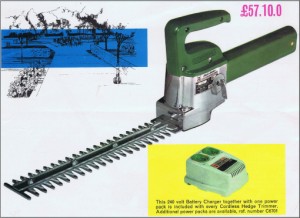
On the search for a Black & Decker battery powered hedge trimmer, will one ever surface?

It’s a thought that we are able to still find and collect some brilliant old machinery and as importantly generally be able to source parts to keep them in working order. I wonder how many old machines from the 20th century and worthy of preservation in the 21st century may get discarded by homeowners at the landfill or go for scrap to sadly be replaced by a newer yet potentially less quality machine. But disposing of expired equipment is nothing new; I’m still on my search for an original 1960’s Black & Decker rechargeable hedge trimmer, an item which after the internal batteries no longer performed as intended would unfortunately fit neatly in a galvanised dustbin of the time, the search continues.

Yet this mass production of machinery and equipment is not a new phenomenon. Manufacturers always had the ambition to balance production with as much profitability as possible, whether it’s machinery or watering cans or as in 1973 when Ginge-Raadvad were considering 80 miles of reinforced PVC garden hosepipe. A figure which seems quite incredible but they would have decided that it was an amount that could be sold easily to the UK public and so 80 miles it is.

But tools, hosepipes, watering cans and machines do reach the end of their lives and as such there are definitely some scare tools and machines about, perhaps once produced in their hundreds or even thousands there are some which are now almost lone survivors. These items and machines are now reappearing, partly due to social media and the internet, they are creeping out of the woodwork or more aptly surfacing from under tarpaulins in overgrown gardens. Some machines find their next performance not in a garden but on an auction site described as ‘barn find’ and ‘rare’ even if they’re not and which doesn’t necessarily equate with the heart-stopping price that is being asked anyway.

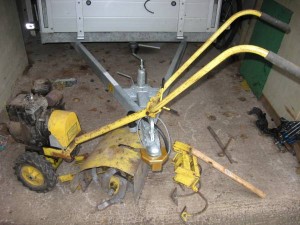
Yellowbird Cultivator Tiller

As mentioned, machines are turning up, so here are two machines as examples in the UK. Several years back I looked up Yellowbird tillers, couldn’t find one here although in other overseas countries one can almost fall over one in every garden shed, but they are reappearing in UK gardens on a regular basis, where have they all been hiding? Are the Yellowbird tillers gathering to plan a mass migration? And the 1964 Remington tiller from Watveare Ltd in Devon, I have the advert but several years of looking and not a sign of a single machine until that is two, separately, turn up for sale on the internet not far away, they were here all the time just squirreled away.

It would appear that whatever you are looking for, whether it was mass produced or created in a small quantity, then it may be closer than you think, of course part of the fun is seeking out that machine, the research and bringing it back to life.

And harking back to the good old days of my childhood I’ve decided then that searching for and collecting all the vintage horticultural equipment and spending hours at the workshop bench to bring it back into use is like being a cross between a Womble who were always “Making good use of the things that we find” and those mice on Bagpuss cheerily chanting “We will fix it” to anything that’s broken. Which reminds me, I’ve got an Iseki rotavator but it’s sadly ill and needs resuscitating, I’m thinking of sending it to those mice, that’ll stump ‘em!

*Footnote. Younger readers may need to visit Youtube to see the delights of both the Wombles and Bagpuss.

by alan

Every Machine Has a History

July 25, 2018 in Articles, Machinery

A Barford Atom to add to the collection perhaps?

One of the pleasures, or depending on ones view it could be a fault, of any hobby is gathering up new items whether they are needed or not. For instance a model railway enthusiast may start with a single train and a loop of track one Christmas and bit by bit they end up having purchased most of Hornby by the following festivities. Or someone may decide to start cycling for a bit of leisurely exercise, initially on a basic bike but in a mere few weeks and by the time one can jokingly utter ‘Are you entering the Tour de France?!’ they’ve already progressed to buying the most advanced carbon fibre race bike and squeezing their unhealthy body into lycra. You see hobbies are addictive, contagious and sneakily devour time and suck money from wallets when we are not looking and thus propel us along the route of collecting overload – whether it’s a train set, a new bike, an even better bike, or some nice horticultural machinery. 

It’s no surprise then that in a small corner of Yorkshire some new machines are hovering on the horizon. The well-practiced horticultural-collectors mantra of ‘I’m not getting any more machines ever again‘ shrivels and dies as machines which are in running condition, free and local are drawn to me by some magical force.

The three tick-boxes of ‘Running Condition’, ‘Free’, and ‘Local’ are just so hard to resist, good manners dictate that one has to at least have a look at the items …and take along a trailer, you know, just in case. 

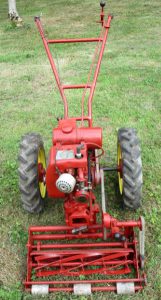
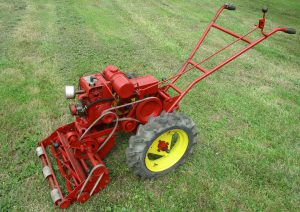
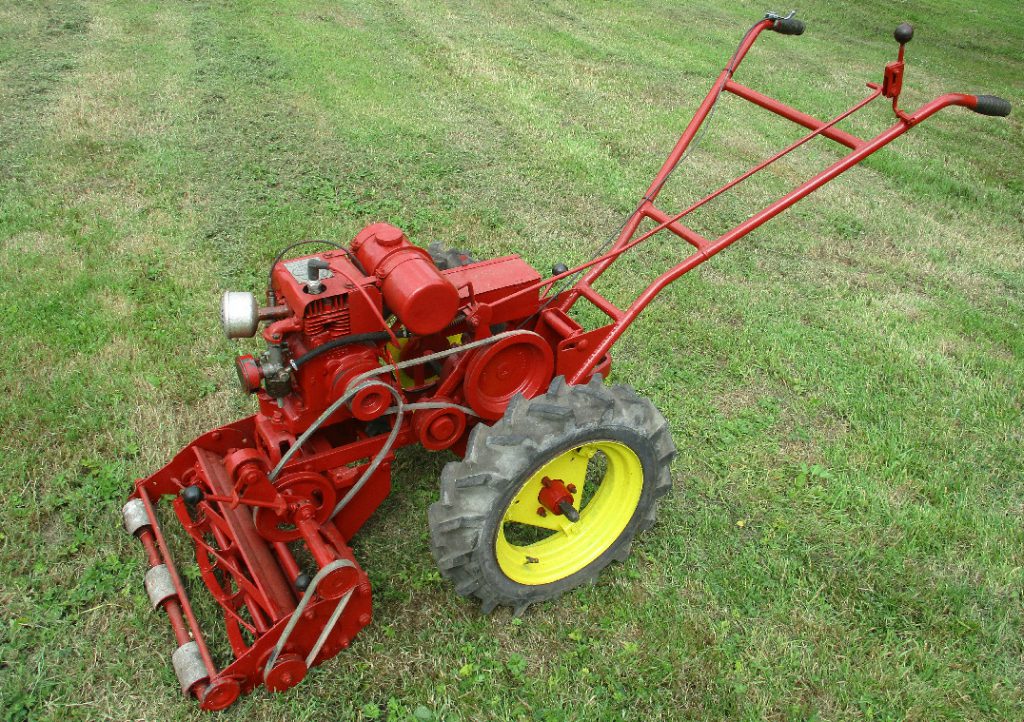
Barford Atom 15 with Cylinder Mower

One of the machines up for perusal is a Barford Atom 15 with cylinder mower attachment, pictured on the right, a machine not out of the ordinary then. It’s a machine I’d never really considered, but, and this is a big but, it’s got local history. We know where the Barford has been since new. We know who bought it and where from, why they bought it and exactly where it was used. In the art world that’s called provenance meaning that after a bit of eureka research the knock-off Picasso that you had a hunch about and picked up at the car boot sale for £3 turns out to be the genuine article, becomes ridiculously desirable and is now worth £3 million. Unfortunately provenance doesn’t make the Barford worth any more, it adds to it’s interest, makes a nice story and brings the machine alive but financial gain just isn’t going to happen. As with several machines I have, no amount of pretty archive pictures and bulging folders of historical data will add to their monetary value and the only way to make them worth more without major grafting is to tape a £20 note to the fuel tank. But that doesn’t matter, it’s a hobby and the research is as interesting as the machine itself, in fact sometimes the history is more fascinating than the actual machine.

Unusually this article is briefly about a specific machine. And just as this Barford has a history so does every machine and they are always worth researching. If you have a manufacturer name, address or makers plate then five places to start are:
Google Books: https://books.google.co.uk/
Graces Guide: https://gracesguide.co.uk
London Gazette: https://www.thegazette.co.uk
Old Maps: https://www.old-maps.co.uk
British Newspaper Archives: https://www.britishnewspaperarchive.co.uk/  

Or for a specific town, street, factory or dealer premises try searching for old postcards on Ebay, or even archive films of towns that have been uploaded to Youtube, possibly even see if the town has a history group online with gallery images –  you’d be surprised what there is. 

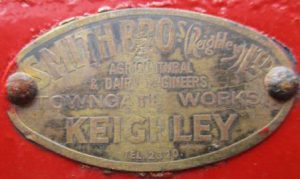
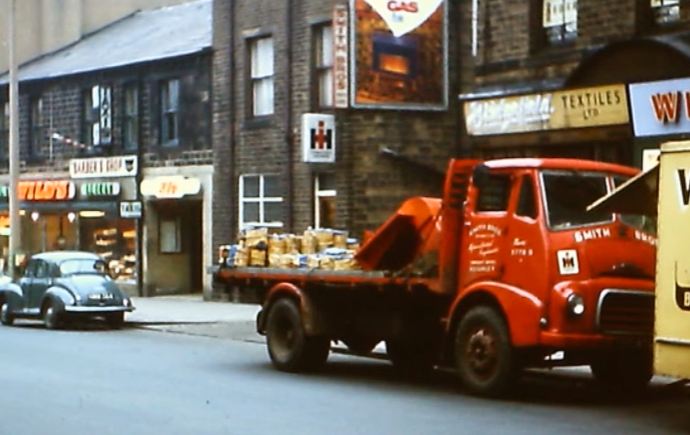
Onwards then with the Barford. It’s got a very nice brass suppliers plate, pictured above right, attached to the frame, and this Barford started life being supplied by Smith Brothers LTD, Towngate Works in Keighley. They were agricultural and dairy engineers. I know the premises no longer exist, demolished decades ago and replaced by a new-fangled concrete building housing shops beneath the bus station multi-story car park, unfortunately replicated all too often in too many places. But thankfully the internet is a fascinating place to rummage about in and find the most incredible things, like a picture of the Smith Brothers shop in Keighley (probably not long before it was demolished) and the side alley the Barford would have been wheeled out of in the late 1950’s. With Smith Bros truck outside with baler twine loaded and a Morris Minor down the road it’s an image that takes us back to a rose-tinted era.


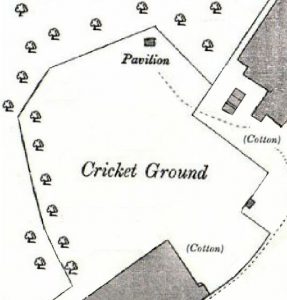
The recreation ground where the Barford spent it’s working life

And where was this Barford Atom heading? It was on it’s way up the valley having been purchased by a local village council to cut the grass on their recreation and sports ground (map image, right). This Barford was purchased with two attachments, one being the cylinder mower and the other a sickle bar mower, it was bought purely as a mowing machine. The recreation ground which once had a cricket pitch still exists and created when the mills came in the mid 1850’s although just like Smith Brothers premises they have been demolished to be replaced by more modern buildings. 

I cannot help but think that this little Barford was there on the recreation and cricket ground to assist other machines, even today the area is still large and would take an age to mow. And what machine preceded it and did the mowing before the Barford was purchased? Research with the parish council may provide the answer. 

As time passes by the Barford did a lot of work and on close inspection has had the handles professionally repaired several times, it was a machine for work. That is until for whatever reason the Barford gets relegated to the back of the machinery shed, possibly it needed repairs, possibly it was replaced by a newer machine with a wider cut, perhaps with a seat and shinier paintwork? 

Barford and cylinder mower back in working order

As with many machines as every day passes the scrap man moves closer. How many machines have been rescued from the scrap? Until one day someone asks what’s happening to the Barford and that’s the point that it’s fortunes turn. It gets repaired with a complete engine overhaul, it gets new parts and a coat of paint and ends up in preservation, it’s a story that is told countless times for a huge number of machines. 

This Barford survives, partly through it being a brilliantly engineered machine and also that someone saw that it shouldn’t go to scrap. 

And does the Barford work? Why of course, it starts instantly and runs well and may even have seen off many machines that have been and gone on that recreation field over the last few decades. 

If you have a machine that needs a bit of research as to the suppliers it came from then again I’d suggest the following resources, you never know what you may discover.

Google Books: https://books.google.co.uk/
Graces Guide: https://gracesguide.co.uk
British Newspaper Archives: https://www.britishnewspaperarchive.co.uk/
London Gazette: https://www.thegazette.co.uk

Old Maps: https://www.old-maps.co.uk

Barford Atom 15 with Cylinder Mower


by alan

Machines in the North East – 1988

June 14, 2018 in Articles, Machinery

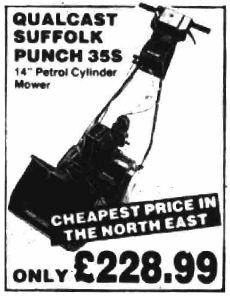
Qualcast Suffolk Punch 35S and the cheapest price in the North East

This month our search for machinery takes us to the north-east of the UK, to be more precise it’s to a now defunct chain of home improvement stores by the name of Dickens. By all accounts Dickens was a fantastic place to shop. They said that they had ‘…the biggest, the cheapest and the widest range of mowers in the world…’. They also had tillers, rotavators, lawn rakes etc and there’s a very short video clip at the bottom of this article – can you name any of the machines?

It can sometimes be a mystery as to who sold which machine, take any vintage machine and if really lucky a search of the chassis or tin-work may perhaps result in finding a dealership sticker, generally it may be a local mower shop or an agricultural supplier. These details are helpful in determining where a machine originated from or at least the point where the transaction was logged. We are aware that there’s garden equipment and machines from the 1970’s and 80’s finding their way into collectors hands, yet these machines may not have originated from that trusty local lawn mower dealer or from an agricultural supplier, these 1970’s and 80’s machines may simply have been picked up from the local DIY store or catalogue company, think B&Q, Argos, Woolworths and even Green Shield Stamps.

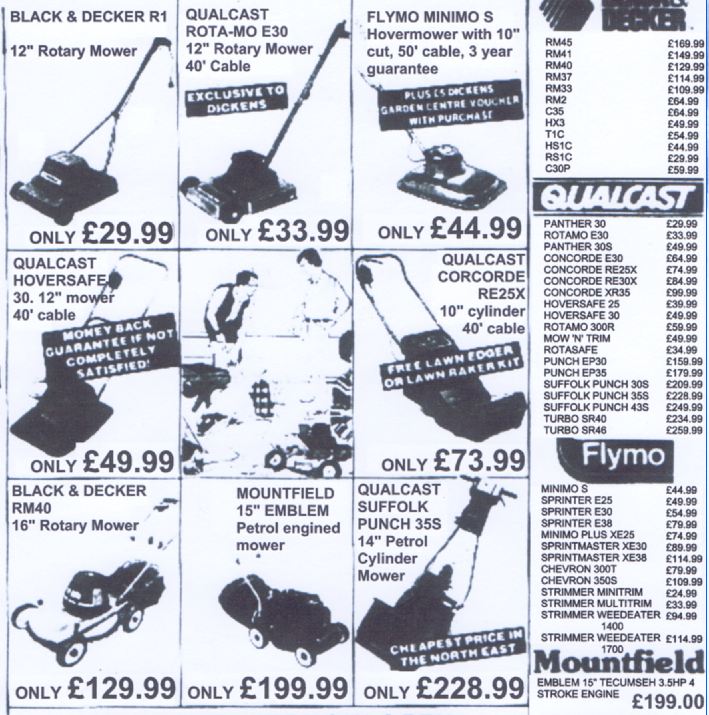
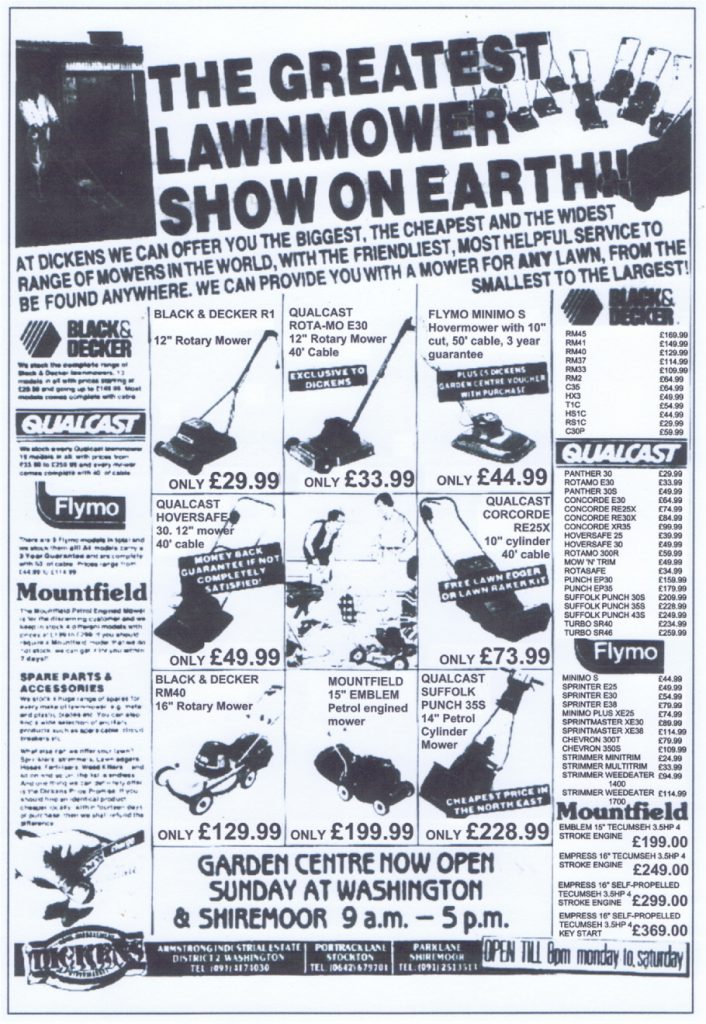
This takes us onto Dickens home improvement stores, they were like an independent B&Q and actually were eventually bought out by B&Q. Dickens advert shown below from April 1988 at the start of the mowing season to attract the spending public shows a vast range of electric and petrol mowers and strimmers too. Who knew there were so many different models on sale at this time? A transcript of this model list and prices will be at the bottom of this article for perusal. Or click this link to see a larger image of the advert.

Dickens Home Improvement Hypermarket Advert 1988


Briefly, there is a huge range of electric mowers. What’s the difference between the Qualcast Concorde RE25X and the RE30X apart from £10.00 ? Or the Flymo Sprinter E25 and E30 ? A brochure would be mighty helpful!
Of note is the advert showing there is a petrol Flymo Strimmer Weedeater 1400 and also a 1700 model – potentially a rare machine now as many may have expired through the last 30 years. The price then was £114.99 which is equivalent to some £308.00 today so a hefty investment for a homeowner.

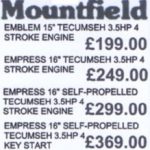
Mountfield have some mowers and all with the 3.5hp Tecumseh engine. Mountfield were mentioned in a previous article where some machines were made until 1982 in a factory in Luxembourg (article here) but where these would have been made is unknown. Business-wise there is a connection between Mountfield and Norlett of Belgium; then Qualcast bought Norlett, and further Qualcast/Flymo at the time had a production plant at Newton Aycliffe, County Durham not far from Dickens. It’s all very complicated and tenuous – but with Dickens saying they had ”…the biggest, the cheapest and the widest range of mowers in the world…’ it makes one wonder if they were mostly sourced from the nearest factories at a bargain price perhaps? 

There isn’t a Mountfield electric mower in the bottom right corner of Dickens advert, they may not have been manufacturing them at the time, but their petrol mowers show that the price nearly doubles between the Mountfield Emblem 15″ and the 16″ self propelled with electric start, both with a 3.5hp Tecumseh engine – would that be a premium product at the time? 


There also happens to be a brilliant Youtube video for a 1976 Dickens television advert. This advert briefly shows machines on display in their garden centre with a tiller, rotavator and mowers at about 50 seconds. https://youtu.be/E3xiHJwIaQ8

Can anyone name the machines being shown in the video below?

Is that a Norlett Beaver Powaspade in gold and white? (see above comment re:Norlett/Flymo/Qualcast) 


The machines in the printed 1988 advert with prices:

Black & Decker RM45  £169.99
Black & Decker RM41  £149.99
Black & Decker RM40  £129.99
Black & Decker RM37  £114.99
Black & Decker RM33  £109.99
Black & Decker RM2  £64.99
Black & Decker C35  £64.99
Black & Decker HX3  £49.99
Black & Decker T1C  £54.99
Black & Decker HS1C  £44.99
Black & Decker RS1C  £29.99
Black & Decker C30P  £59.99

Qualcast Panther 30  £29.99
Qualcast Rotamo E30  £33.99
Qualcast Panther 30S  £49.99
Qualcast Concorde E30  £64.99
Qualcast Concorde RE25X  £74.99
Qualcast Concorde RE30X  £84.99
Qualcast Concorde XR35  £99.99
Qualcast Hoversafe 25  £39.99
Qualcast Hoversafe 30  £49.99
Qualcast Rotamo 300R  £59.99
Qualcast Punch EP30  £159.99
Qualcast Punch EP35  £179.99
Qualcast Suffolk Punch 30S  £209.99
Qualcast Suffolk Punch 35S  £228.99
Qualcast Suffolk Punch 43S  £249.99
Qualcast Turbo SR40  £234.99
Qualcast Turbo SR46  £259.99

Flymo Minimo S  £44.99
Flymo Sprinter E25  £49.99
Flymo Sprinter E30  £54.99
Flymo Sprinter E38  £79.99
Flymo Minimo Plus XE25  £74.99
Flymo Sprintmaster XE30  £89.99
Flymo Sprintmaster XE38  £114.99
Flymo Chevron 300T  £79.99
Flymo Chevron 350S  £109.99
Flymo Strimmer Minitrim  £24.99
Flymo Strimmer Multitrim £33.99
Flymo Strimmer weedeater 1400  £94.99
Flymo Strimmer weedeater 1700 £114.99

Mountfield Emblem 15″ Tecumseh 3.5hp 4 stroke engine £199.00
Mountfield Empress 16″ Tecumseh 3.5hp 4 stroke engine £249.00
Mountfield Empress 16″ Self Propelled, Tecumseh 3.5hp 4 stroke engine £299.00
Mountfield Empress 16″ Self Propelled, Key Start, Tecumseh 3.5hp 4 stroke engine £369.00


by alan

Then and Now – 1910

April 29, 2018 in Articles

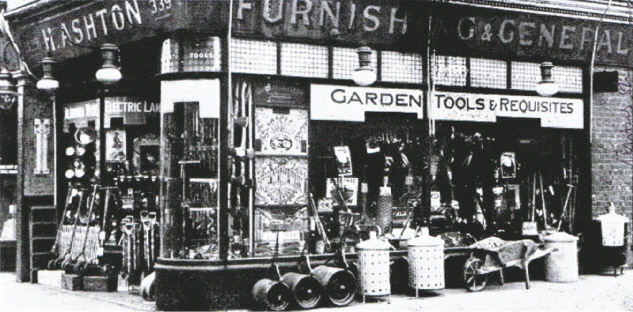
Our latest Then & Now picture is from 1910 and features Ashton’s of East Sheen. The sign in the window announcing the stock of Garden Tools & Requisites and the array of merchandise on the pavement tells us that they probably stocked everything the early 20th century gardener could want.

The image is typical of many shops from that time. Ashton’s featured an expensive curved glass window on the corner, the thermometer  on the wall to the left of the image, the lamps hanging on elegant supports and the impressive sign writing to catch the eye – one would like to think this was a shop of some quality.


The items on display include wooden D handled spades by the entrance, incinerators (of the same design of today), a display of hand tools in the window along with wire netting and seed adverts. The timber wheelbarrow looks a beast with a steel-rimmed wheel and even if some person tried to schlep it away down the street they’d no doubt be out of breath after a couple of hundred yards. 

The lawnmowers and particularly the rollers are of interest. I’m guessing they may have been manufactured by Thomas Green & Sons who were at the New Surrey Works, Southwark Street, London about a ten mile distance from Ashton’s shop. 

But long gone is Ashton’s, little did they know that a century later their wares would make an awesome horticultural display at a vintage show: They’d have thought we were mad!

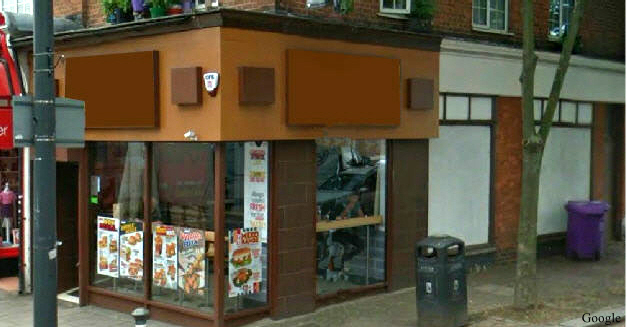
And now the shop is a fast food outlet as in the image below.

by alan

Tractor World Scotland 2018 Photos

March 26, 2018 in Show Reports

Photographs and sale items of horticultural items at Tractor World Scotland 2018. 

Click the link below:

Tractor World Scotland 2018 Report

by alan

What was on sale in 1960….

March 16, 2018 in Articles, Machinery

A selection of garden equipment in 1960

1960 is our year of choice for this article, it was the year that The Beatles was officially named and formed, the Mark 1 Mini had only just recently been introduced and in space exploration the first probe was launched to go to Mars although it failed to reach it’s target. 

Back down on earth and with our new Mini on the driveway trying to out-shine next doors Morris Oxford, there was also a whole host of equipment available for the garden.

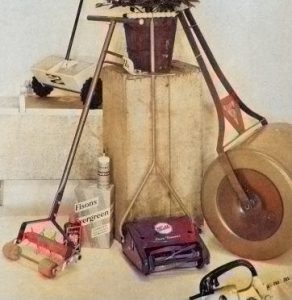
The image on the right shows some of the items that no self-respecting suburban homeowner should be without to keep their garden as tidy as possible.

Clockwise from top left is the Fisons Evergreen fertilizer spreader able to treat 64 sq yards of lawn on each fill-up. The price was 59s 6d for the spreader and the fertilizer itself was from 3s 11d. 

The Greensleaves garden shears on top of the box were 34s 6d and were available from Derry & Toms the London department store in Kensington. 

For a more upmarket experience why not shop at Harrods? They were retailing the illustrated lawn roller which could be filled with either water or sand, available in several sizes with a range of prices starting at £3 7s 11d up to nearly £7. One’s chauffeur could fetch it home for ones gardener…..

The Army & Navy Stores were selling the small Webb Lawn Trimmer push mower for the smaller areas of lawn for £7 19s 7d, whilst the push lawn aerator was £4 15s and another Harrods purchase. 

The Tarpen Little Giant chainsaw in the very bottom right corner of the first picture could be used with a single hand and cut through 4″ branches, the price to you in 1960 was £22. 


Shay Rotogardner 125

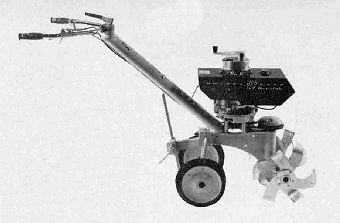
There were many machines on sale in 1960 which were engine powered. One such was the self-propelled Shay Rotogardner 125, pictured right, powered by a “four-stroke Aspera engine and impulse starter making it easy to operate” according to sales literature. It had specially tempered steel tines that “will break up any soil“. The cost of the complete machine as pictured was £67. 

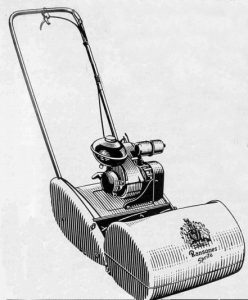
Or how about something to cut the lawn such as the Ransomes Sprite pictured below. In April 1960 Ransomes were advertising this as a new mower with 14″ cut and as being ‘the lowest priced motor mower in it’s class‘ costing £32.17s.3d. For something more expensive on sale at the same time and also from Ransomes was their Marquis mower with 18″ or 20″ cut powered by a Clinton 4-stroke 117cc engine, prices started at £74.1s.9d, and £89.0s.6d for the 20″, an electric version was also available.


Ransomes 14″ cut Sprite for £32.17s.3d.

Webb battery mower

Through the decades battery-powered machines have been a bit of a novelty, if one didn’t want a petrol mower or be tethered by an electric cable to a three-pin plug then in late 1960 Webb had the answer with their ‘new to the market‘ rechargeable battery mower model, no mess, no fumes or noise. Webb previously showcased a remote controlled battery mower to the general public in 1959 at the Chelsea Flower Show but this one is just the ordinary walk-behind type – there’s a great vintage image on our Webb gallery of a sale of a battery mower taking place.

The battery mower cost £58.19s.5d for the 14″ cut and £48.19s.10d for the 12″ cut. They were available from ‘all large stores and hardware shops‘ so Webb were reaching out to a large customer base and could see some potential.

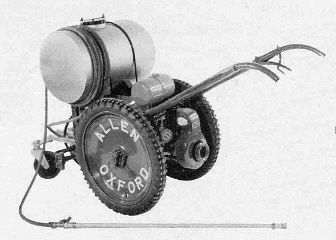
Still in 1960, Godfrey’s of Marylebone Lane, London, were advertising the “Allen Universal Self-propelled Motor Scythe” with a two or four stroke Villiers engine – pictured below.

The image shows it with an attached spray tank and four foot lance, apparently all the attachments just plugged in. The machine itself was £98.15s; the spray tank was £23.10s; spray pump including lance was an additional £39.4s.6d. 

Allen Scythe with spray tank, pump and lance

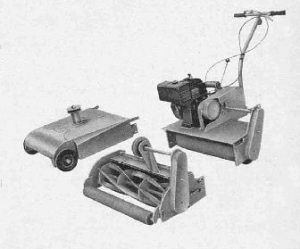
Hayter Scythe with a Villiers 4-stroke engine.

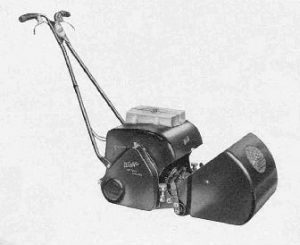
Several manufacturers designed machines that were able to take attachments just like the Allen scythe could with the sprayer. Hayter made the Hayter Scythe – pictured right is a model which consisted of a power unit that could be used as a rotary scythe or cylinder mower. Powered by a Villiers 4-stroke, 265cc engine and with a three-speed gearbox and kick start the machine had adjustable cutting height for the scythe attachment and could be converted to a 30″ cylinder mower complete with roller, a good machine for a larger garden where the most use could be gained from it. Again available from Godfreys, or A.T.Oliver & Sons, Luton or our favourite (who most have sold every machine ever created) Robert. H. Andrews Ltd, Sunningdale. Price: £119.10s; cylinder mower an extra £47.16s; and the grass box another £7. 15s. 

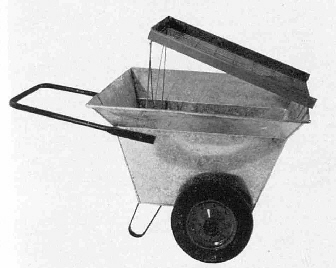
For helping around the garden in the early 60’s, the Army & Navy Stores were selling a light but strong metal wheelbarrow with pneumatic tyres for £15.4s.6d. The image below shows it fitted with a useful screen for sifting soil made by Barrowscreen. Sold by Woodmans of Pinner the Barrowscreen cost 34s 11d and could fit any barrow.

Wheelbarrow by Army & Navy Stores 1960. Fitted with a soil sifting Barrowscreen.

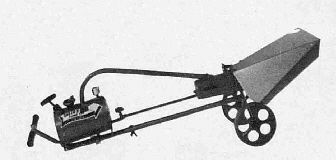
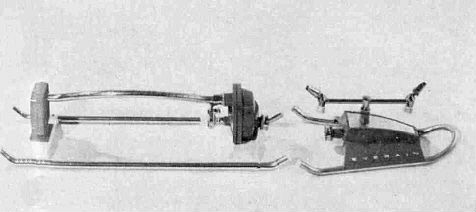
Finally, two smaller items which could have graced a 60’s shed was a flame gun on wheels called the Sheen-X. and also garden sprinklers from the American Everain range, both items illustrated below.

The Sheen-X had a tank that could hold one gallon of paraffin and could destroy surface and deep rooted weeds with ease. Price was £12.17s.  The Everain sprinklers were both adjustable, the larger one could cover up to 2400 square feet, the smaller one a 50 foot diameter. Prices were £6.7s.6d and £3.12s respectively.

Sheen-X paraffin powered flame gun.

Everain garden sprinklers.

by alan

VHGMC in the Telegraph newspaper 2009

March 3, 2018 in Club News


In April 2009 the Telegraph newspaper ran an excellent article about the VHGMC with the headline of ‘Down Tools? Not these vintage gems’.

The Telegraph article can be read online and can be found at:

https://www.telegraph.co.uk/gardening/gardeningequipment/5124249/Vintage-garden-machinery-Down-tools-Not-these-vintage-gems.html


The VHGMC featured in the Telegraph newspaper in 2009 –  Click this image for a larger version


by alan

Howard Bantam 1950

February 22, 2018 in Articles, Machinery

Humour can capture the attention of the prospective customer far easier than any serious advertising might.

All from 1950 are the following four adverts for the Howard Rotavator ‘Bantam’. Each is carefully crafted to highlight the difficulties of gardening that the Bantam can overcome: Digging, weeding and labour saving. 


The fourth advert proves that an oily machine can be a great fashion accessory for the owner outside their 16thC Elizabethan mansion. 

There are more Howard images in the VHGMC Howard gallery pages.


Dogged by digging? Howard Bantam 1950


Worried by weeds? Howard Bantam 1950


Gardening? I though I knew it all! Howard Bantam 1950


My Bantam’s a treasure – Howard Bantam 1950


Howard Bantam Brochure

by alan

G. D. Mountfield Adverts

January 20, 2018 in Articles

Mountfield 7hp Ride-on-mower in 1973

G.D.Mountfield of Maidenhead are well known to be associated with a large range of horticultural machinery and accordingly the company did a vast amount of advertising.

Mountfield started their ‘proper’ marketing in 1967 after the appointment of Robinson Scotland and Partners who handled the marketing, advertising and public relations. Advertising was planned for amongst others the Sunday Times, Observer, Daily Mail and the Times.

Later advertising appears not only in gardening publications or through trade magazines but also in glossy magazines of the 60’s, 70’s and 80’s such as The Tatler and Country Life – a place to market a premium brand but ultimately with a limited audience too.

It was reported in 1985 that Mountfield had been acquired by Ransomes, Sims and Jefferies for £4.25m. Although this did not include Mountfield’s distribution and retail subsidiaries of Robert. H. Andrews Ltd (see gallery) or Power Gardening (Slough) Ltd which were retained by Mountfield (source). Power Gardening (Slough) Ltd residing at 40 Stoke Road, was the distributor of Wheel Horse products from the 1960’s onwards (source)  although the address on adverts they refer to is one of Mountfield’s at Grenfell Place, Maidenhead.

Mountfield were involved in the sale of various machines in the UK, most notably the Wheel Horse garden tractors and the Reo range too. But just as Mountfield marketed these machines here so did others in other countries, for example in France; Fenwick of St.Ouen and also the workshop of Goetzmann based in Lingolsheim near the Geman border. Goetzmann also retailed the Jacobsen ride-on mowers such as the Jacobsen Chief. The image below shows two French adverts.

It should be noted that from about 1968 to 1982  G. D. Mountfield were involved in  a factory in Troisvierges, Luxembourg (source1) , (source2) making their lawnmowers – potentially making Mountfield a widespread company that probably pulled in merchandise and components from across the world.  The Troisvierges factory was not too far, approximately 120 miles away, from where European Wheel Horse tractors were assembled in Belgium that  Power Gardening (Slough) Ltd distributed.

Reo and Wheel Horse mowers being retailed in France by Geotzmann (left) and Fenwick (right).

Through the decades Mountfield appear to have dabbled in the advertising world by changing their adverts rather frequently although 1967 when advertising agents Robinson Scotland and Partners took over was a year when several adverts for different machines were consistent. Here is a short selection of different small-sized adverts that we have for Mountfield showing just a few of the machines they retailed, although their machinery range was vast. These adverts span fourteen years from 1965 to 1979:

1965 – Mountfield with address at Grenfell Place, Maidenhead.

Mountfield marketed wheel Horse and  this advert comes from 1966. The address has changed to East Street, Maidenhead.

Mountfield M3 lawn mower and price of £47.10. in 1967

Mountfield Wheel Horse Reo Mower with price of £215 and £245 for the electric start model in 1967

Mountfield Wheel Horse Advert with price of £275 (7hp recoil start) and £335 (8hp electric start) in 1967

Wheel Horse Mountfield 1968

Mountfield  Reo ride-on mower advert 1968

Mountfield ‘Horse of The Year’ tractor advert 1970

Mountfield also marketed General Electric Elec-Trak machines in the mid 1973-1976

In 1975 Milloy & Warrington of Cubbington, Leamington Spa were retailing the Wheel Horse with a small mention of Mountfield.

Wheel Horse Mountfield Advert for Nairn Brown (Glasgow) in 1979