machinery

by alan

Quiz 2025 – As Seen On TV

December 13, 2025 in Articles

Here are twelve questions for a short quiz.

The theme this year is mowers that have been on TV or in magazines, and sometimes associated with well-known people.

It shouldn’t be a challenging quiz. If you have seen Only Fools and Horses, One Foot in the Grave, marvelled at Jim Bowen on Bullseye, watched Wallace & Grommit, or know who sang ‘Green, Green Grass of Home’, then this is the ideal quiz to pass a few minutes.

A pencil and paper are handy to write down the answers.

As always, the answers are at the bottom of the page.

Questions:

Q1: Who had a gold-painted Valor Ironcrete mower?

1: Which famous Welsh singer was photographed in 1967 at their Shepperton home with a gold-coloured Valor Ironcrete petrol-powered lawn mower?  It was said that this mower was specially painted and presented in recognition of their worldwide No. 1 hit with ‘Green, Green Grass of Home’ in 1966.

A: Tom Jones
B: Dame Shirley Bassey
C: Sir Harry Secombe

Q2: Did Victor Meldrew use a Mountfield?

2: In the 1990s TV comedy series One Foot In The Grave, Victor Meldrew played by Richard Wilson was always having mishaps. In one episode, he accidentally inhaled some fertilizer and got very high and jolly, before climbing aboard a ride on mower. Eventually driving into a house and shredding a carpet, as well as other disasters. But what was this rear-engine ride-on mower that was popular in the UK?

A: Reo Lawn Skiff
B: Mountfield M25
C: Toro Whirlwind

Q3: What mower does Grommit own?

3: In the brilliant Aardman Animations 2024 film Vengence Most Fowl, what type of lawnmower does Wallace & Grommit own? And used by Norbot the gnome to unhelpfully tidy-up Grommit’s cottage garden but instead destroying it.

A: Cylinder mower
B: Rotary mower
C: Hover mower

Q4: Maybe Rod Stewart didn’t have a Westwood.

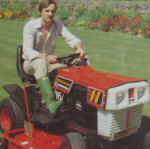
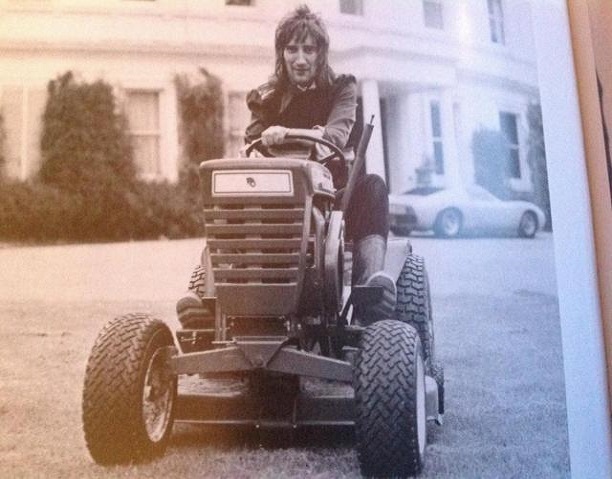
4: In 1973, Rod Stewart, of singing fame, was photographed in the UK sitting on his red-painted, Kohler-powered, ride-on mower/garden tractor outside his house. But what make was Rod Stewart’s tractor? (Clue: Only one of them was being made in 1973).

A: Westwood
B: Countax
C: Wheel Horse

Q5: What was a lot less bovver than a hover?

5: In 1983, television adverts for a certain mower used the slogan ‘It’s a lot less bovver than a hover’. One advert featured the actor Nicholas Smith – who also starred as Mr Rumbold in Are You Being Served? But what mower brand was being sold in the adverts, which was (allegedly) better than the hover mowers? 

A: Qualcast
B: ATCO
C: Hayter

Q6: In 1980, who advertised Wheel Horse tractors?

6: In 1980, Mountfield adverts for Wheel Horse tractors featured which Scottish motor racing champion? He also advertised the tractors in the USA. Among other races, he won the 1965 Italian Grand Prix, but obviously not on a Wheel Horse. Who was he?

A: Jim Clark
B: Colin McRae
C: Jackie Stewart

Q7: Who advertised Webb machines?

7: In the mid-1970s, which TV personality, who presented Gardeners’ World, did Wolseley Webb recruit to lead their sales campaign of mowers and tillers? It is the earliest presenter – but which one was that?

A: Percy Thrower
B: Geoff Hamilton
C: Geoffrey Smith

Q8: What did Forest drive?

8: In the 1994 USA film Forest Gump, which real make of ride-on mower, with a Turtle inspired logo, did Forest use?

A: Tortrak
B: Snapper
C: Snap-Jack

Q9: Who got dragged about by an ATCO mower?

9: In the 1965 comedy film The Early Bird, about Grimsdale Dairy,  which slapstick actor (dressed as a milkman) gets dragged around a garden by an ATCO cylinder lawnmower before ending up in a pond? (I think the name Mr Grimsdale! might give it away).

A: Eric Sykes
B: Norman Wisdom
C: George Formby

Q10: Did Rodney buy mower engines, rotavator or tools?

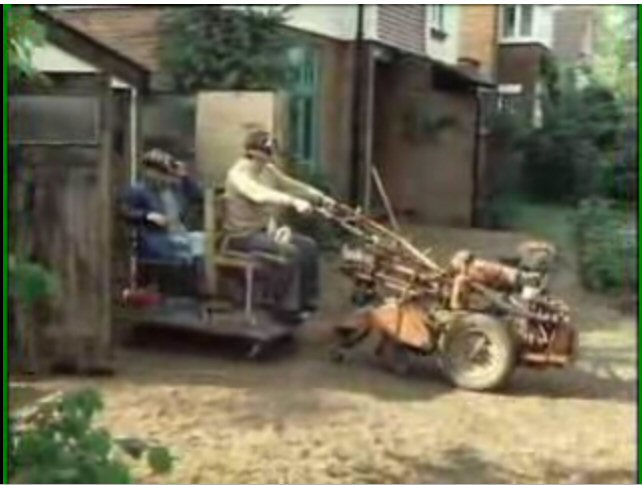
10: In the 1983 episode of Only Fools and Horses named ‘Healthy Competition’, Rodney and Mickey were tricked by Del Boy into buying which horticulturally-related item at auction?

A: A rotavator which wouldn’t rotavate
B: A heap of old lawnmower engines
C: A collection of woodwormed vintage garden tools

Q11: Did Granville buy a Hayter Kestral?

11: In 1982, the TV series Open All Hours featured the episode ‘The Ginger Men’. In the episode, Granville buys a second-hand mower with the intention of fitting the engine to his shop bike. What make of British mower did he buy? (and consequently leave on the shop floor for the bun salesman to fall over).

A: Suffolk Punch
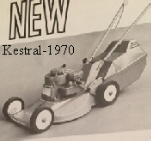
B: Hayter Kestral
C: Landmaster Sovereign

Q12: What amazing prizes could be won on Bullseye?

12: The original version of the darts quiz show Bullseye aired from 1981 until 1995. It was presented by Jim Bowen, who was often quoted (or misquoted) using the words “super” and “smashing” to describe things. Anyway, which of these super, smashing prizes could be won on Bullseye for just “the throw of a dart”?

A: Black & Decker H1 Hover Mower, together with a B&D electric lawn rake, a Fisons lawn spreader, a bag of lawn weed & feed, and a pair of lawn edging shears. 
B: 5-door Morris Ital car in white paintwork
C: £2000 clothing spending spree – possibly at C&A

Answers:

1: A: Tom Jones. He was presented with a gold-painted Ironcrete Valor mower in 1967. He had sold over one million copies of his recording of ‘Green, green grass of home’ – hence the grass connection with mowers. It was obviously a sales and marketing tactic by the Ironcrete company, who were based in Birmingham and some distance from the Shepperton home of Tom Jones, so not a local company. Here is a picture (Note: It is an external link to alamy.com)

2: B: Mountfield M25. Victor Meldrew drove a Mountfield rear-engine model M25 in the TV series One Foot In The Grave – causing mayhem along the way. You can watch the clip on Youtube here (Note: It is an external link to Youtube). The mower does have a custom-made rear grass collector, presumably for comic effect when mowing the carpet and ejecting the cuttings!

3: A: Cylinder mower. Wallace & Grommit owned a cylinder mower which they used as part of their ‘Gnome Improvements’ household maintenance business. Grommit also owned a strimmer, which Norbot used in the garden.

4: C: Wheel Horse. Rod Stewart was photographed in 1973 with his red-painted Wheel Horse mower. The model looks like a Raider 10 or similar. He didn’t have a Westwood as in the photo – that was a red herring…or a red Westwood. Here is a picture (Note: It is an external link). Westwood didn’t make their own branded tractors until 1976, and Countax until 1990.

5: A: Qualcast. Nicholas Smith (aka Mr Rumbold in Are You Being Served?) also appeared in adverts for Qualcast mowers.

6: C: Jackie Stewart. In 1980, Scottish motor racing champion Jackie Stewart featured in magazine adverts for Wheel Horse garden tractors. In fact, in 1980, Jackie Stewart also filmed a Wheel Horse advert in Florida for the USA market.

7: A: Percy Thrower. In the mid-1970s, Percy Thrower advertised Wolseley Webb mowers and tillers. Gardeners’ World started in 1968 with Percy Thrower as the first presenter until 1976 when Arthur Billitt took over. Followed by presenters Geoff Hamilton from 1979 (1979 to 1996), and Geoffrey Smith from 1980 (1980 to 1982). Alan Titchmarsh took over from 1996.

8: B: Snapper. In the 1994 film Forest Gump, Forest used a real American-made Snapper ride-on mower for mowing his lawn and then public spaces around Greenbow, Alabama. The other answers, Tortrak and Snap-Jack were made up.

9: B: Norman Wisdom. The film ‘The Early Bird’ was the first Norman Wisdom film in colour. Norman Wisdom (as Norman Pitkin) worked for Grimsdale’s Dairy in competition with Consolidated Dairies. Not all goes well, and Norman gets dragged around a garden, through a fence, a greenhouse, and into a pond by an ATCO cylinder mower. https://en.wikipedia.org/wiki/The_Early_Bird (Note: It is an external link to wikipedia).

10: B: A heap of old lawn mower engines. Del Boy had originally bought the engines but took them to auction and tricked Rodney into buying them. The clip can be seen on Youtube here (Note: It is an external link to Youtube).

11: A: Suffolk Punch. Granville bought a red-painted Suffolk Punch mower with the intention of fitting the engine to his bike.

12: A, B, and C: All three answers are correct. And yes — a Black & Decker mower, lawn rake, and various other lawn products did make an appearance as prizes. Bullseye was, after all, renowned for its eclectic prize selection, ranging in value, desirability, and, one suspects, their proximity to the nearest Argos-type warehouse. While the show often had a Mini Metro as the star prize, the Morris Ital also made an appearance.

—————————————-
Footnote:

The Howard Gem as featured in The Good Life from 1975 onwards

This year’s twelve questions are all about mowers. My apologies to non-mower collectors. I did set out with good intentions to find examples of rotavators, hand tools, sprayers and other implements that might have been on the tv or had celebrity ownership. The search turned up very little, except for the obvious Howard rotavator from The Good Life, as in the picture.

However, there have been many appearances of mowers on TV, so that must be the go-to horticultural item for TV purposes.

Who remembers the Anchor butter advert from 1993? I’m told that the mower still exists somewhere, but does anyone know where? Apparently, there was only one machine and that was built from spare parts for the commercial, then digitally copied to make it appear there was more than one. The Anchor advert can be seen on YouTube.

Also, a club member can be briefly seen with his Dennis mower in the opening scenes of the 2002 film The Gathering Storm about Winston Churchill. The mower scenes were set in 1934 at Chartwell.

I also have vague memories of mowers and garden tools appearing as prizes on UK quiz shows, but found nothing apart from Bullseye. But I’m sure a Flymo or strimmer must have passed by on The Generation Game conveyor belt.

As we have seen with sitcoms and also with Norman Wisdom, mowers have long been used in comical situations. This includes Tom and Jerry, who can be seen on a 1949 comic cover with Tom about to be mown down by a sidewheel mower.

I shall now embark on twelve more questions for next year. Subject currently unknown, but it won’t be machines on TV as this one wasn’t easy to compile.

After multiple rounds of editing and head scratching, this 2025 question page was created on the 7th October 2025. It was raining.

by alan

Video: Malvern Autumn Show 2025

October 3, 2025 in Articles, Club News

On the 26th-28th September 2025 the VHGMC put on a show stand at the Autumn Show at the Three Counties Showground at Malvern.

A good range of machines were exhibited with hand tools, walk-behind and ride-on machines, rotavators, and mowers. These included examples from Uni Horse, Barford, Gravely, Atco, Ransomes, Nash, Dron-Wal, and many others.

The video below is just a walk about with the video camera – edited to two and a half minutes. Plus some photographs of exhibits.

by alan

Mowers and Bicycles

February 16, 2025 in Articles, Machinery

It is often overlooked, but many of the manufacturers of vintage horticultural machinery were also involved in manufacturing an array of other items. Just because we know them for horticultural items doesn’t mean they didn’t have interests (or beginnings) in other products.

One modern example is Honda. We know them in horticultural circles for starting to make lawnmowers in 1978 (47 years ago as I write this!), but they also manufacture across a range of areas, including automotive, motorbikes, marine, aircraft, generators, and power equipment.

Going way back to the 1950s, Nutt Engineering of Cambridge, who made the Hayn mowers, had a sideline in producing wire-framed clothes horses – a world away from the Honda empire, but companies need to diversify to keep working.

You may know the USA ride-on mower manufacturers Huffy, Murray, and AMF (American Machine and Foundry), but did you know that in the early-to-late 20th century they all had an interest in the manufacture of bicycles? Indeed, there was a booming industry with bikes, followed by a similar interest in ride-on mowers and powered garden equipment. Manufacturers diversified, expanded, and invested where the market and profits were.

Like the ride-on mowers that Huffy, Murray, and AMF sold in the UK, many of the bikes they produced were sold worldwide.

I have found some USA adverts which show the bikes that these ride-on mower manufacturers made:

Huffy

1967 Huffy bikes and a Huffy Sheraton ride-on mower. At the back-left is the British-designed Huffy-Moulton luxury bicycle. In the foreground, the Huffy Rail dragster.

Huffy, who produced bikes throughout the 20th century, is best known in the UK for their diminutive yet well-engineered ride-on mowers in the 1960s and ‘70s. Along with the mowers, Huffy was advertising 55 bike models including tandems and trikes in America.

In the mid-1960s, Huffy collaborated with the English engineer Alex Moulton and created the Huffy-Moulton bike (see image, right), this was claimed to be the first basic advance in bike design in 70 years. The bike had small wheels, instant acceleration due to gearing and low inertia, and was said to be nimble with light steering.

Interestingly, in the early 1980s, Huffy signed an agreement with Raleigh bikes in the UK, which gave them exclusive rights to manufacture and sell the Raleigh models in the United States. Huffy also sponsored a professional BMX (Bicycle Motocross) team. BMX started in the early 1970s in the USA, and eventually, Huffy had a range of BMX bikes. The Anglo-American BMX Championship, held in the UK in 1982, included the Huffy BMX Racing Team.

It is reported that bikes for the Huffy brand are now made in China.

Murray

1970 Murray Eliminator

Murray is another name that we associate with mowers in the UK. In the 1970s, many Murray ride-on mowers and garden tractors were rebadged and sold as Mountfield-branded machines. In the 1930s, in the USA, Murray started producing bikes alongside car parts and children’s pedal cars. However, in 1985, F. H. Tompkins, the owner of the UK company Hayter, purchased Murray for the mower brand and production, then in 2005 Briggs & Stratton took over Murray. According to research, Murray bikes had been produced until the end of the 1990s.

AMF -American Machine and Foundry

The third company that had an interest in mowers and bikes was AMF. The company manufactured some of the Massey Ferguson lawn and garden tractors starting in 1966, as well as the first ATCO ride-on mowers in the early 1980s. They also produced models branded as Dynamark, which Westwood sold in the 1970s before creating their own range of ride-on mowers. AMF had purchased the Roadmaster brand of bikes from the Cleveland Welding Company in 1950. There were 41 bike models in 1970, and bikes were manufactured until the late 1990s.

1970 AMF Roadmaster bikes. The interestingly named ‘Flying Wedge’ on the left, and Aerobee Renegade. The Flying Wedge had a 5-speed stick shift.

by alan

Quiz 2024 – Locations and Countries

December 11, 2024 in Articles

Here are twelve questions for a short quiz.

Usually, the questions are quite random but this time they have a theme! How good is your machinery/manufacturer/geography knowledge as the questions and answers all relate to places around the UK and the World.

Reading the questions and answers it becomes apparent how widespread machinery manufacture is before the products even reach the shops in the UK. I’m also amazed how many machines manufactured abroad have had long journeys by sea, rail, road or perhaps air to get to their destination – they may be better travelled than many people!

A pencil and paper is handy to write down the answers. Many of the manufacturers and locations have been mentioned on the VHGMC over the years – also the pictures and captions may help with some.

As always, the answers (which are sometimes much longer than the questions) are at the bottom of the page.

Questions:

Q1: In which cities were Green & Sons located?

1: Thomas Green & Sons of lawn mower fame manufactured numerous machines. They had ironworks in Leeds, but which other city did they work from?

A: Birmingham
B: London
C: Coventry

Q2: Where was the Bean tractor made?

2: The Bean tool frame tractor was initially a mid-1940s machine but had design changes passing through several manufacturers. The first machines were built at the Blackburn Aircraft Factory, but in which county?

A: East Yorkshire
B: Lancashire
C: Lincolnshire

(Get this tricky one right and gain bonus points!)

Q3: Over the border to the Ginge factory.

3. In the 1960s the Danish company Ginge set up a new factory far northwards in the UK to produce their lawn mowers. They were still manufacturing in Copenhagen, and had an office in Croxley Green, Herefordshire, but where was the new UK factory?

A: Grantham, Lincolnshire
B: Stockton-on-Tees, County Durham
C: Irvine, Ayrshire

Q4: Where was Hahn located?

4. In the 1970s, the companies of Ransomes and Hahn had a two-way agreement selling each other’s machinery in their respective countries. Ransomes was based in the UK, but in which country was Hahn?

A: Germany
B: USA
C: Switzerland

Q5: Morrison didn’t have anything to do with Kangaroos.

5. Flymo had associations with Toro and Norlett in the 1970s. They also had a foray with Morrison selling their imported mowers in the UK in the 1960s. In which country was Morrison based?

A: New Zealand
B: Australia
C: Canada

Q6: Allett Mowers moved about.

6. In 2021 Geoff Ravenhall restored Allett’s first ever MK1 production mower. It was made in 1965 and powered by a Reliant 3-wheeler four-cylinder engine and gearbox – read about it here on the forum.

Allett is firmly a British company with an amazing history of producing top-notch mowers, however, the company was sold in 1994 and moved north from its premises in Corby, Northamptonshire. But to where did it move?

A: Swansea, Wales
B: Arbroath, Scotland
C: Belfast, Ireland

Q7: Taking Le Qualcast over La Manche.

7. Qualcast sold their mowers all over the world. Although we are used to seeing English adverts, it stands to reason that they must also exist in other languages. Advertising for the Qualcast Model C in 1923 carried the heading “Le Secret Des Belles Pelouses Anglaises” – but in which country did this advert appear? (And for a huge bonus point can you guess the translation of the advert heading?)

A: Canada
B: Austria
C: France

Q8: Where were Rolcut secateurs exhibited early last century?

8. There are many secateur brands and designs in the UK. Rolcut made the anvil-type ones, but at which major show were they first exhibited by Rolcut?

A: The Chelsea Flower Show, London – 1927
B: Ideal Homes Exhibition, Olympia Exhibition Centre, London – 1949
C: The Royal Show, Newcastle – 1962

Q9: Where did the Merry Tiller originate?

9. It can be surprising to find that a machine (or design) has been imported to the UK rather than being home-grown – the Merry Tiller is one such machine. In which country did the Merry Tiller originate?

A: Australia
B: Netherlands
C: USA

Q10: Bobbing along on a Dixon ZTR.

10. Many horticultural machines (now vintage), as varied as the Dixon ZTR mower, Billy Goat, and Bluebird Scarifier, were sold from the Garden Machine Centre, Sunningdale, Berkshire. Which name is usually associated with this address?

A: T. Parker & Sons Ltd.
B: Bob Andrews
C: John Allen & Sons

Q11: Where was the Solo Multimot from?

11: In the early 1980s, Solo Power Equipment Ltd of Brierley Hill, West Midlands (later moving to Chorley, Lancashire) imported the Solo Multimot system – it was an engine that could be attached and removed to power various garden machines/attachments. But where was the Multimot from?

A: Germany
B: Wales
C: Australia

Q12: Where did the Piaggio trucks come from?

12: The usual odd question/answer to finish: The Piaggio 3-wheel commercial truck was sold in the UK in the 1970s and advertised in greenskeeper magazines and the like. It was ideal for golf courses, nurseries or large gardens where it would be useful with a tipping rear body and up to half-ton capacity. Where did the Piaggio truck come from?

A: Andrews Lawn Edgers Ltd
B: Italy
C: Sunningdale, Berkshire

Answers:

1: B: London. Adverts for Greens lawn mowers often show the addresses Smithfield Ironworks in Leeds and New Surrey Works, Southwark Street, London – although earlier London addresses were shown in the 1800s for items including fencing, gates, and verandahs, and large items such as steam road rollers.

2: A: East Yorkshire. The Blackburn Aircraft factory, where the Bean tool frame tractor was made, was located at Brough, East Yorkshire. The town of Blackburn is in Lancashire…..but no aircraft factory.

3: C: Irvine. Ginge mowers were produced at a factory at Irvine Industrial Estate, Irvine, Ayrshire. In the late-1960s the cylinder mowers included the hand-propelled 12″ Prisma and 16″ Futura. Powered cylinder mowers featured the 18″ Meridia and 21″ Atlanta. The mowers were popular and in 1967 were said to have captured 6% of the British lawnmower market. Petrol rotary mowers followed in 1970. There is a VHGMC article about Ginge here.

4: B: USA.  Hahn was based in the USA. Two garden-sized ride-on machines brought into the UK were the Hahn LTD 550 ride-on mower and the Hahn GT-700 multi-purpose tractor which could be fitted with a mower, snow blade, sweeper etc. There were Briggs & Stratton-powered pedestrian rotary mowers but these seem quite scarce in the UK.

5: A: New Zealand. Morrison was based in New Zealand. In 1980 the range of mowers advertised included 14, 16, 20 and 24″ Olympic cylinder models, and the M4B and Conquest rear-collect rotaries. In 1969 Gardening Which? magazine tested the Morrison Golden mower priced at £48, it had 4 wheels, rear grass collection, and a 3 hp Kirby/Tecumseh engine.

6: B: Arbroath, Scotland. In 1994 Allett Mowers was sold to Reekie Engineering. Production moved to Arbroath in 1995. Turfmech Machinery purchased Allett in 2007. The mowers are now made in Hixon, Staffordshire. You can read the detailed history of Allett Mowers on their website blog – here.

7: C: France. The heading is from a 1923 advert in France for the Qualcast ‘Modele C‘. The heading translates as “The secret of beautiful English lawns”. The mower could be purchased at L. F. Michon, 46 rue de la Bienfaisance, Paris.

8: A: The Chelsea Flower Show in 1927. The Rolcut secateurs were a success and in the 1930s advertised that they had an Award of Merit from the Royal Horticultural Society and a silver medal from the National Rose Society.

9: C: USA. The Merry Tiller originated in the USA. It was designed by Clayton Merry in 1947. Wolseley in Birmingham had the manufacturing rights in the UK. In 1953 the USA-made Merry Tiller was introduced to the Japanese market and was an immediate hit as it was a simple and lightweight machine with lots of attachments and uses at a sensible price – one never knows which countries machines may end up in!

10: B: Bob Andrews. The Machine Centre, Sunningdale, is associated with Bob Andrews. A wide range of garden machines from an array of manufacturers and suppliers were retailed. John Allen & Sons are associated with Allen machines, Motostandard, Mayfield, and Roper. T. Parker & Sons sold many items but also imported the Australian range of Deckson mowers in the 1970s.

11: A: Germany. The Multimot from the German company Solo consisted of a 1.5 hp 2-stroke engine that could be fitted to a number of different machines such as a hover mower, chainsaw, tiller, etc. There was an earlier Solo system before the Multimot. There are quite a few Solo machines including more traditional-powered rotary mowers in the UK.

12: A, B, and C. All three answers. Andrews Lawn Edgers Ltd, The Garden Machine Centre, Sunningdale, Berkshire, advertised the Italian Piaggio Vespa commercial trucks. The model VC600 could do 60 mpg and transport half a ton; the VC200 could carry slightly less but managed 100 mpg. Both were ideal for running around a horticultural or garden establishment but would later be replaced by machines like the Kawasaki Mule or John Deere Gator.

Footnote:

And that’s all the website front-page posts for 2024.

I was asked how long it takes to find and compile the twelve questions for December. Well, if we add up the hours then it will certainly total a couple of days. The questions were written in early September with this whole article page pre-loaded onto the website to publish itself on a set date in December.

It takes a while to find the questions (made harder this year because I decided to go with a ‘theme’ of locations and places), write the answers, cross-check everything for correctness, then find a picture for each and crop and upload, and a general bit of ‘nip and tuck’ to tidy up the questions and answers. And have the whole thing previewed on laptop/tablet/mobile to make sure it displays as intended.

To aid and assist….(or perhaps hinder)…the website spell-checks and grammatically susses everything out as I type but it gets very confused with manufacturers and machine names that it’s not familiar with. Then an analyzer (some AI malarky) decides to criticize the whole thing by giving a readability score out of 100. Anyway, you have read this far so the words must have been strung together right proper-like at my desk in Yorkshire. Happy Christmas!


by alan

Quiz: Guess the company…#3

September 18, 2024 in Articles, Club News

This is the third in a series of ‘Guess the company’ quizzes – and is more difficult than the first two and the clues are not in date order. Can you determine which single company the clues refer to?

The answer is at the bottom of the page.

Past quizzes can be found here: First Quiz and Second Quiz

Which single company do all these clues point to?

Clue 1: This UK company made most of their own gardening machines and by 1987 30% of production was sold abroad.

Clue 2: A successful company, the assets included a full-size helicopter in a brown livery with the company name.

Clue 3: The company started small in a former warehouse in High Wycombe in the 1960s, but nearly twenty years later it was eventually bought in a £9m deal.

Clue 4: In 1985 an unorthodox ride-on mower was produced. It was called the Clipper and had an engine protruding at the front. It had chain-driven small front wheels and strange steering. It was a short-lived model!

Clue 5: A slight deviation from garden machines, in the 1980s the company also advertised a range of small groundwork machines for DIY excavation projects. These included two four-wheel dumpers and a small digger.

Clue 6: Several small garden tillers/cultivators were made including the Gemini, Imp and Groundhog. In 1973 the Imp had a 15″ working width, a 2.5 hp Aspera engine and a centrifugal clutch, and cost £60+vat.

Clue 7: Although a range of pedestrian mowers was made, in the 1980s rebranded Ibea mowers started to be sold by the company. These included the Rotastripe (rear roller), County and Enduro (4-wheel).

Clue 8: The company is best known for their range of ride-on mowers, the early/vintage ones are popular and have a following of enthusiasts. These include the early W series models which were petrol-driven, in 1984 a diesel model was added. The W series was replaced by the S and T series.

Scroll down for the answer……

All the clues point to the company Westwood Engineering Ltd.

The company started in the late 1960s at Fryers Works, Abercromby Avenue, High Wycombe. Around 1973 they moved to Plympton, Devon.

The company originally manufactured many pedestrian lawnmowers and tillers, including the Sabre mower range and the Westwood Imp 2.5 hp cultivator with a 15″ working width. Westwood also listed the Rockwell electric hedge trimmers.

Westwood got into the ride-on mower market in 1971 with the launch of the Lawnbug. To have larger lawn tractors, Westwood sold the American Dynamark tractor range in the 1970s. However, by the mid-1970s the more familiar tractors that we associate with the W-series were manufactured by Westwood.

The Westwood tractors can be found worldwide, and in the 1980s were rebadged as Ginge in Denmark and Agro-Trac in Austria. They also had cosmetic changes and rebadged as the Honda-powered Lawnmaster made by Bartram Mowers Ltd in Norwich.

In 1985, Ransomes, Sims & Jefferies purchased Mountfield for £9m.

Away from horticultural machines, the Westwood company advertised the ‘Muck Shifters – clue number 5 and illustrated below. These were diggers and dumpers for small projects – such as in a back garden where larger machines couldn’t gain access. The ‘Muscleman’ was a small digger that could dig down to 7′ deep; the ‘Muck Truk’ was a 46″ wide 4-wheel dumper that could carry up to 400KG; the ‘Skip Truk’ was a high-lift version of the Muck Truk that could lift high enough to tip into a skip.

Westwood Clipper (Clue 4), and the Muck Shifters with the Muscleman digger and the Muck Truk (Clue 5)

by alan

Vertex Engine

August 26, 2024 in Articles, Machinery

Earlier this year there was a discussion on the forum about how many different manufacturers (or brands) had produced engines that were fitted to horticultural machines. The list became long and would have been longer if I hadn’t stopped adding to it.

The forum topic and list can be found here: https://vhgmc.co.uk/forums/topic/engines-brands-manufacturers/

One engine name that didn’t get mentioned or added to the list was Vertex. Internet searches indicate that these engines had a Villiers connection.

The reason that I mention Vertex is that I have been researching Mountfield lawn mowers and these two-stroke engines began to be fitted to a few models in the mid-1970s – Mountfields own literature and price lists show the use of the 4 hp, 2-stroke engines in 1975. Although I have found a brochure showing these Mountfields with the Vertex engines, I’ve yet to find one of the mowers in real life – what happened to them all? If you are someone who owns such a mower and scouring the internet for info, then you have a rare survivor!

Mountfield M6 Power Drive fitted with a Vertex engine.

In 1977 and while the engines were already being fitted to their mowers, G. D. Mountfield announced they were now taking over production of these engines and would produce them at their Maidenhead premises, they were marketed as ‘All-British Built’. In fact, in 1977 Mountfield advertised for Skilled Production Machinists to start immediately to set up and run the recently-formed Vertex Engine Division at a new production facility being built in Maidenhead – the advertised wage was £4000 plus relocation expenses.

Mountfield were quite upbeat about their engines. Apparently, they had exceptionally high torque over the whole working speed range giving unmatched power. One trade report (AMJ) stated that the engines would be ‘…a welcome replacement to the engines of US and Italian extraction as seen in previous models’. However, people who maintained Vertex engines in their line of work have told me that they weren’t the best!

Classed as medium-sized professional mowers, in the late ’70s, the three models fitted with the Vertex engines were the 18″ M4 Professional, 18″ M4 Power Drive, and the 21″ M6 Power Drive as illustrated. All three machines were fitted with snorkel air cleaners, and polythene grass boxes were optional. In 1975, Mountfield had listed the M6 Power Drive 2-stroke at £177.50 – which was £19 more than the equivalent 4-stroke.

In the early 1980s, the Vertex models were still advertised, but with other new mowers being more important, an always-evolving market, and whatever issues the Vertex engines may have had, they seem to have soon vanished.

One thing is certain: even with relatively modern machines, some do not appear on the scene or on auction websites. Machines don’t have to be old to have disappeared into obscurity leaving only some fleeting bits of literature and adverts behind.

But I do wonder where all the Mountfield Vertex mowers went!

by alan

The Hare And The Tortoise

April 26, 2024 in Articles, Club News

There are many horticultural items that we now take for granted. These include secateurs with their introduction in the early 1800s (read more about them here), and rotary mowers with the early Rotoscythe being described as unorthodox with the suggestion that it would never catch on (see Rotoscythe in the gallery).

With newly launched machines the marketing folk had a great deal of input when thinking up names, slogans, icons, logos, and advertising. How about Howard with their clever palindrome word ‘rotavator’, or Wheel Horse with ‘Get a Horse! Wheel Horse Of Course!’.  

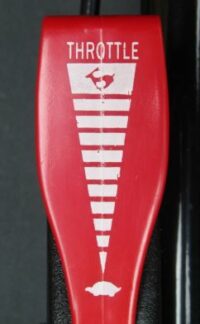
We also take for granted a lot of instructions, icons and safety stickers on both old and new machines and which we easily understand these days. But there’s one that we all have seen but that I cannot find the source for – when did the hare & tortoise symbols, depicting fast and slow, first appear on machinery throttle controls?

The hare and tortoise symbols, possibly inspired by Aesop’s fables although in that scenario the steady tortoise wins the day, are popular on lawnmowers but did they also appear on other machines first? And were the rabbit and hare symbols a home-grown idea or imported from the USA, Europe or China, or even an invention by an engine manufacturer? Does anybody know?

When did the first Hare & Tortoise throttle control symbols first appear?

by alan

Lawn Fertiliser Spreaders

March 25, 2024 in Articles, Machinery

Lawn Spreaders - but why the green frog....

You may be wondering why there’s a picture of a stuffed green frog in this article, but more about that later…

I’ve concluded that nearly every garden, certainly those with a lawn, will have felt the presence of a garden lawn fertiliser spreader at some point. In particular, one of those plastic spreaders given away if one purchased a significant amount of granular fertiliser. Several of those plastic freebie spreaders had the unfortunate ability to block up if there was even the slightest bit of moisture on the grass that got onto the distributor. But some adverts worked in reverse where the fertiliser was free when a spreader was bought; and others just offered a free loan of the spreader.

Over the decades there has been a significant number of push lawn spreaders, plastic and steel, which have promised to give the perfect amount of lawn care product to lawns. They all work on much the same principle of non-slip wheels, a hopper, some sort of regulator to distribute the goods evenly, and a handle.

Cunningly, as with most of these domestic spreaders, there was often a range of weed and feed products that also went with them (not forgetting that some of the cheaper spreaders were calibrated for their own products) – and once one had the spreader then it would be easier to keep buying that manufacturers’ products year after year and trust that the system of looking after the lawn worked….and it did work, a foolproof way to look after the lawn with ease.

Briefly, here are a few companies that sold lawn spreaders:

Sisis started to produce a range of their Truspred models in the early 1960s – Click for advert image. These were available in 20″, 24″, 36″ and 36″ Super, although the range was of a professional quality and often aimed at sports pitches and the like. A smaller more domestic-friendly 15″ model was advertised in the late 1960s for £8 15s. Many models were promoted for ‘accurate, consistent spreading of seed and modern fertilisers’ regardless of manufacturer. They were also good for applying lawn or surface dressings and rock salt to de-ice drives and paths in winter.

ICI Lawn Plus Spreader 1970

ICI promoted their ‘Plus’ Lawn Spreader in the 1970s. Often a 12″ model, it was priced at 45s in 1970, but if the gardener had signed up for the ICI Garden Savers Plan there was a 6s refund. By 1980 ICI was selling a 12″ lawn spreader for as little as £8.

Wolf produced different spreaders in the 1970s and ’80s – Click for image. The model WE 16″ distributor had a curved metal hopper with a tough green-coloured stove enamel finish. The WE 18″ had a PVC hopper, while the WD was all steel. In the 1990s, Wolf produced the 17″ WE251 (Illustrated, below), sold in B&Q priced at £29.95.

Fisons is a popular name in the gardening game. The range of chemical products in the 1970s included the Evergreen 80 for a weed-free lawn, also Lawn Food, Lawn Peat and Velvetone Spring Dressings. Accordingly, Fisons also had a lawn spreader, sometimes in a blue paint scheme – Click for Image. But they also had a budget 12″ spreader advertised in 1970 for only 35s when bought with a combined purchase of Evergreen 80 and Fisons Rose Food – an odd combination but maybe the rose food wasn’t a big seller?

Wolf Lawn Spreader model WE251 in 1990

PBI had lawn spreaders through the 1980s, but they could also come coupled with a product. In 1989 the spreader came with a free pack of their Toplawn 600sq feet pack of Weed & Feed for £16.

In the 1990s both Levingtons and Scotts spreaders appear in advertising. Scotts models being the Accugreen and Evergreen. And today, a vast range of spreaders with different branding are marketed.

And what about the stuffed green frog shown at the top of this article? Well, who remembers the Fisons Evergreen TV adverts from perhaps 20 years ago, with a cartoon gangly-legged frog sprinkling some lawn feed around? I think the song went ‘If the lawn is a farce, and the weeds a right pain in the grass….‘. I bought some lawn feed, got a free lawn spreader (which is gathering spiders and dust in the back of the barn), also filled in and sent off a form, and amazingly this stuffed Fisons Evergreen frog turned up in the post – forget expensive vintage sales merchandise and paraphernalia because I’ve got a stuffed green Fisons frog…now that’s proper advertising!

by alan

Quiz: Guess the company…#1

February 18, 2024 in Articles, Club News

From the eight clues can you name this famous company?

Since the December quizzes are always popular, here are some clues to pass a few minutes and work out the company name. The answer and a more detailed explanation of the company at the bottom of the page.

Which single company do all these clues refer to?

Clue 1: This company started to manufacture their machines in the UK in 1964, with the first adverts pricing the models around £35. The machines were a success and the company was acquired by a much larger entity in 1968.

Clue 2: The machines they produced were ideal for use on bankings, gradients, orchards, and other grassed areas.

Clue 3: The first models had two-stroke petrol engines, but in 1969 electric-powered models started to be introduced – these were ideal for the domestic garden where a power supply would readily be at hand.

Clue 4: One particular colour is usually associated with these machines, but early models were blue.

Clue 5: Models used the mulching principle, but in 1979 an electric-powered model was launched that was capable of collecting the grass clippings in a rear fabric grass bag. This model was advertised on television.

Clue 6: This company also produced electric-powered small cylinder mowers in the 1970s, and professional cylinder mowers in the 1980s, although the professional models were just rebadged Norlett machines.

Clue 7: From the late 1970s, a range of 4-wheeled rotary mowers were advertised. Many of these models used steel decks rather than the polymer material which the company is famous for. The Lawnchief, which did have a polymer deck, was a very popular rotary model with a 16″ cutting width and a 3.5 hp Tecumseh/ B&S engine or electric power.

Clue 8: Through the years model names have included the Contractor, Professional, Pilot, Minimo, Hovervac, Sprinter, Lawnlady, Chevron, and Ventura, to name just some.

Scroll down for the answer……

This 1969 photograph shows a Flymo, fitted with a wheeled undercarriage, being used to mow roadside verges.

The eight clues all point to one company which is Flymo.

Flymo started producing their hover mower range in 1964 at a factory in Newton Aycliffe, County Durham. Just four years later, in 1968, Flymo was bought by Electrolux. The Flymo range has been successfully developed and expanded over the decades.

The initial Flymo had a 2.5 hp 2-stroke Aspera engine and a 19″ hardened steel blade within a tough plastic hood. The ‘Professional’ version gained a power increase to a 4 hp engine. Other petrol engines in the hover mower stable have included Briggs & Stratton, JLO, Tecumseh, and Kawasaki.

A huge amount of electric hover mowers have been available. These have been staggeringly popular and cover a wide range of options, these include collectors such as the DXE which was launched in the late 1970s (clue number 5) and was advertised on TV. The DXE could either leave the clippings behind or collect them in a fabric grass bag that hung between the handles. In the 1980s, the Sprintmaster range could also collect grass clippings. The 1990s Hoverstripe models gained rear rollers. The smallest electric hover mower was from the Minimo range with a 10″ cutting width.

Flymo also produced a range of domestic cylinder mowers in the 1970s (clue number 6), they were called Lawnlady and Princess. These were very basic machines with small-sized cutting cylinders. In the 1980s, Norlett Precision cylinder mowers were rebadged as Flymo.

A large range of four-wheel rotary mowers complimented the hover range. They started in the late 1970s and covered many cutting widths, engine choices, push or self-propelled, and some early models that were front-wheel drive.

by alan

VHGMC Machinery Log Sheet – Download

January 17, 2024 in Articles, Club News

Here we are at the beginning of a new year and it won’t be that many weeks until the shows and events start. The first main event is Tractor World at the Three Counties Showground at Malvern on Saturday 24th and Sunday 25th of February – more information: https://tractorworldshow.co.uk/

If anyone needs a log sheet for their machines for any show – whether a main event or just a local show – then they can be downloaded from the VHGMC.

The VHGMC log sheet can be either filled in online and then printed, or can be downloaded to your computer.

The logsheets can be found in the member download section at: https://vhgmc.co.uk/member-downloads/vhgmc-log-sheet-download/

Often members of the public will spend more time looking at an exhibit if there’s a log sheet that provides more than basic information. I recall watching members of the public perusing the horticultural exhibits at Newark tractor show a few years ago, the exhibits with interesting log sheets with date of manufacture, place of origin, a bit of background, and perhaps a story to tell, held the attention of the viewer far longer than those that just showed a basic machine model and name. We also saw that people take a photo of a log sheet as well as the machine it’s attached to. Remember that you can always add a page or two of restoration photos or extra information to go with your log sheet.

Horticulture Display at Malvern 2016