Club News

by alan

The History of Mr Challis’s 1899 Lawn Sweeper

March 17, 2026 in Club News

We are all probably familiar with the early pony-drawn lawn mowers of the 19th century. These machines transformed the maintenance of large grounds, making the task of mowing more efficient and quicker.

Yet alongside these mowers were also pony-drawn lawn sweepers. These sweepers played an important role in keeping lawns around country houses immaculate, collecting clippings, leaves, and debris.

In the 1800s, pedestrian lawn and path sweepers were already being produced; more on those later. Also, horse-drawn sweepers could be found cleaning the streets of towns and cities; in 1869 The Bristol Waggon Works Company Limited were making street sweeping machines.

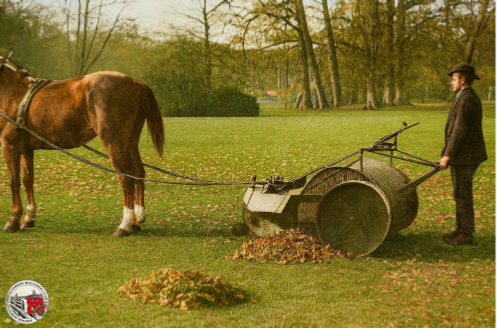
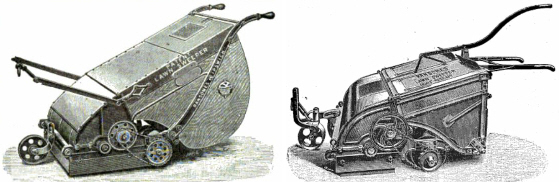
One lawn sweeper in particular, as illustrated below in colour, has an interesting history of development and some posh addresses:

Mr J. Challis’ improved lawn sweeper in 1899. He was the head gardener at Wilton House, Salisbury.

Mr Challis’ sweeper starts with an earlier patent by another gardener. In early 1895, William Sutton, Clerk of Works at Petworth Park, Sussex, and Edwin Walter Pull, Head Gardener also at Petworth (I’ll refer to these gentlemen as Sutton & Pull) applied for a patent for ‘An Improved Lawn Sweeping and Collecting Machine’. This was the predecessor of, and similar to, Mr Challis’s shown in the colour image, but there is an early 1900s photo of an original sweeping machine at Woolverton Hall upon which all improvements were made.

When Sutton & Pull were working at Petworth Park, it was the residence of Lord Leconfield. It is now a National Trust property known as Petworth House and Park. Sussex. Petwork Park’s substantial lawns would be labour intensive, and with significant surrounding tree coverage with the usual autumn leaf fall, a lawn sweeper would be a sound idea.

Sutton & Pull’s 1895 sweeper had two 2’ 4” wheels, and two 9” wheels; all were made of iron. The large wheels powered a set of five adjustable revolving brushes within the rear drum. The brushes swept the debris into a collector at the front, which could be emptied by either being completely detached or by opening a lid….and therein lies the problem as it wasn’t easy to empty!

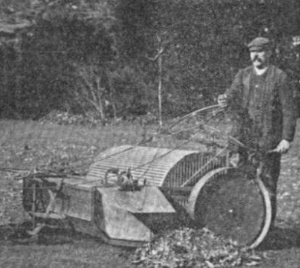
Mr Challis with his lawn sweeper

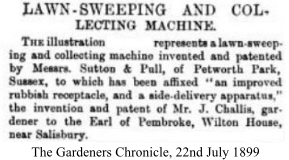
To make emptying easier, Mr Challis, the head gardener for the Earl of Pembroke at Wilton House, Salisbury, took Sutton & Pulls sweeper and created his own lawn sweeper design, he secured a patent in 1899. Contemporary articles state this certainly was an adaptation of Sutton & Pull’s earlier design, thus Challis’ new machine (as in the colour and black & white images) was a combination of his and theirs. The patent drawings show similarities. (See excerpt)

The modifications that Mr Challis made to Sutton & Pull’s sweeper enabled the leaves and general lawn debris to be ejected from the side of the collector once it was full. This meant that the operator didn’t have to stop, which sped up the sweeping process; adverts claimed ‘Remarkable saving of time. Reduction in amount of labour. Economy in cost of working’. One man with a lad, a light horse, and a 5’ sweeper was claimed to be able to clear a fifteen acre lawn in one day and save the labour of fourteen men.

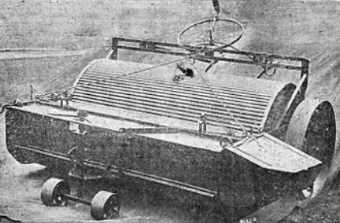
The sweepers emptying improvement was two doors, with one at each end of the collector, and a pusher that slid within the collector. This device was connected to cables around a hand-operated wheel which opened the doors and moved the slider. It was ingenious if convoluted. I think the wheel and handle mechanism around which the cables pass is a bike wheel, as shown in the image.

The mechanics of Mr Challis’ lawn sweeper

The manufacturer was Mr Peter Buchan, Engineer, Caledonian Iron Works, Chichester. Mr Challis was available to give demonstrations at Wilton House.

Mr Challis’ improved lawn sweeper was advertised in several gardening magazines and had favourable reviews. Mr Challis was a talented gardener and had gardening correspondence in magazines, as well as judging shows and being knowledgeable in his field. However, it is unknown how many sweeping machines were sold, although they were still being advertised in 1915.

I wonder if any have survived the last one hundred years, or perhaps they all ended up as scrap when their use and pony power were no longer needed. The use of engine-powered machinery was creeping in, for example, in 1900 Thomas and William Coldwell applied for a British patent for a ‘self-propelled machine for rolling, mowing or sweeping lawns‘.

Pedestrian Lawn Sweepers

As mentioned, pedestrian-powered lawn sweepers were available earlier than Challis’ pony-drawn design; several featured in gardening magazines.

Well-known manufacturers were Thomas Green and Ransomes. Several patents included one by Thomas Green in 1878.

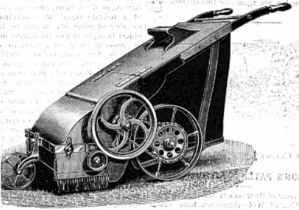
John Lampitt, Lawn Sweeper, 1890

In 1890, John Lampitt and Co., engineers at the Vulcan Works, Banbury, were advertising a pedestrian lawn and path sweeper, as illustrated. This was the Davis Patent Lawn Sweeper. Four sizes of this machine were made. Apparently, they sold well and were in demand.

A simple design, the wheels rotated an internal brush and threw debris into a rear collector. The airflow also created suction, which aided the process.

The sweeper could collect in both wet and dry weather, and lift leaves, pine cones, sticks and stones. It could pick up leaves from gravel paths without disturbing the surface.

Ransomes, Sims and Jefferies Ltd, Orwell Works, Ipswich, were promoting two lawn sweepers in the mid-1890s. This again was the Davis Patent and was available from them in two sizes.

The smaller model, illustrated below on the left, had a sweeping width of 2′ with four brushes driven by a chain from a rear roller. It was intended to be used by two men with one pulling the machine and the other pushing.

The larger machine, illustrated on the right, was to be pulled by a pony or small horse. It was 5′ wide but had a 4′ sweeping width. It could be emptied by using the central lever to raise the collector.

Satisfied customers were the gardeners Mr Norman who worked for the Marquis of Salisbury at Hatfield, and Mr Taylor who worked for Lord De Saumares at Shrubland Park, Suffolk.

Ransomes Davis Patent Lawn Sweeper 1895. The right side machine says ‘Davis Patent’ upon it.

by alan

A Scottish Seed Order

February 6, 2026 in Club News

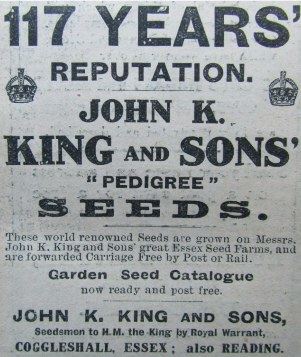
In recent issues of The Cultivator magazine, Andrew Hall wrote about seed packets and the people and companies behind some of the famous names, such as Carters and Suttons. Indeed, some of the seed merchants go back a long time. For example, as in the shown advert, by 1910 John K. King and Sons had 117 years of reputation and at the time a Royal Warrant to the King.

As collectors of horticultural items, even the smaller items, such as the seed packets and garden requisites, are as important as the machinery. Still, it’s easy to forget that there was a person behind every purchase. Who were the people buying those seeds, pondering over a new spade in Woolworths, or considering a new rotavator from the Howard brochure?  Every item has a history and a story to tell.

For the rest of this article, we shall head to Scotland.

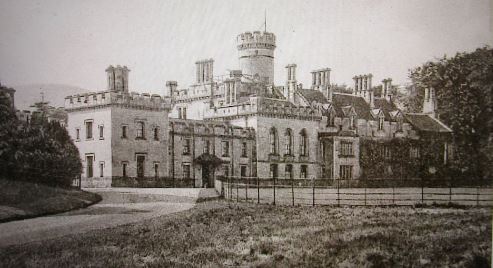
Dreghorn Castle, Edinburgh, around 1900.

Among my archive is a 1910 seed order compiled at Dreghorn Castle, Colinton, Edinburgh, when James Stewart Clark was the tenant.  Essentially, the Dreghorn property was a 17th-century mansion with subsequent enlargements over time, and was reportedly situated in a beautiful park. No doubt with ornamental or pleasure gardens, a vegetable garden, and the staff to maintain them, with a range of tools and paraphernalia of that time.

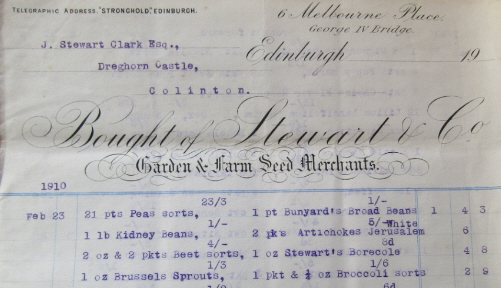
The gardener’s seed order is quite interesting and tells of what was being grown in the early 1900s. It was sent from Dreghorn Castle to Stewart & Co, Garden & Farm Seed Merchants, 6 Melbourne Place, (on the corner of Victoria Street), Edinburgh, in February 1910. This building was demolished in 1967.

For the vegetable garden, many items were ordered in ounces – cabbage, onions, turnips, radish, cauliflower, and sprouts – but there were also specific varieties:

  • 1 oz Musselburgh Leek
  • 1 pint Bunyard’s Broad Beans
  • 2 packets White Jerusalem Artichokes
  • 1 oz Stewart’s Borecole (kale)
  • 1 packet Celery Major Clarke’s Perfection
  • 1 packet Cucumber Lockie’s Perfection

Peas, parsnips, spinach, kidney beans, and two packets of herbs rounded out what must have been a very respectable harvest. Some of the seed varieties there were ordered are now considered ‘Heritage Varieties’.

Also ordered were 3 pecks of potatoes at 10 shillings. I had to look up what quantity a peck is: 2 imperial gallons, or one quarter of a bushel.

The ornamental and display areas got a good ordering of seeds too, including Godetia, Malope, Alyssum, Canterbury Bells, Gypsophila, Clarkia, Nigella and sweet peas. And 8 packets of ‘Choice Flower Seeds of sorts’ – I wonder what they were.

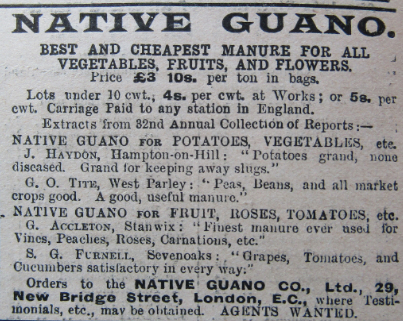
1910 Guano Advert

The labour aspect would have been great for any substantial garden of this time, with minimal mechanisation unlike today. The soil preparation with digging and manuring, as well as seed sowing, thinning or pricking out,  and where necessary hardening off and planting out – within the order is 800 tallies (plant labels). And then the watering, hoeing, and the constant care.

Several items were ordered along with the seeds. Fertilizer and soil improvers included 2 cwts Canary Guano (of which many importers’ fortunes were made), 1 cwt bone dust, and 1 cwt nitrate of soda.

The list was amended on the 19th March 1910 to include 1 pair of secateurs at five shillings, 5 dozen Pinks Mrs Simpkins (Carnations), and one gallon of the ‘Most efficient mildew destroyer’!

It’s a snapshot of a moment in time. Dreghorn Castle, structurally struggling and owned by the War Office, was set on fire and detonated by the army in 1955 – films of this destruction taking place can be seen on YouTube. Today, the site is Dreghorn Barracks, adjacent to the Edinburgh bypass. Although there are specimen trees, woodland and parkland still visible, sadly, there’s no evidence left of the once productive gardens.

by alan

Video: Malvern Autumn Show 2025

October 3, 2025 in Articles, Club News

On the 26th-28th September 2025 the VHGMC put on a show stand at the Autumn Show at the Three Counties Showground at Malvern.

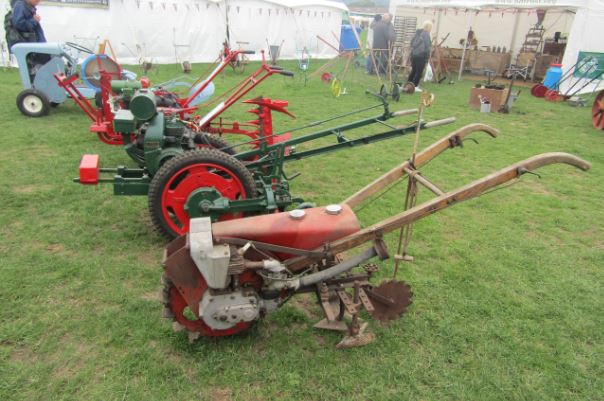
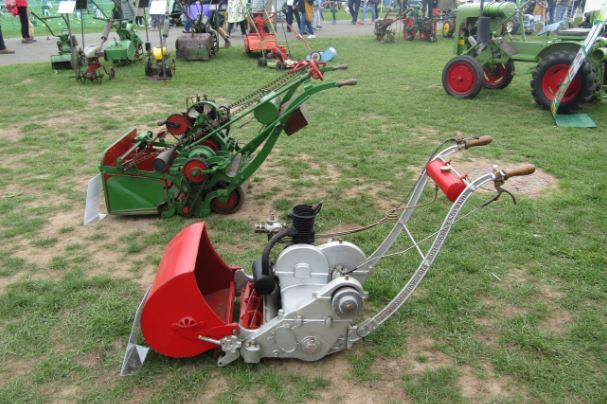
A good range of machines were exhibited with hand tools, walk-behind and ride-on machines, rotavators, and mowers. These included examples from Uni Horse, Barford, Gravely, Atco, Ransomes, Nash, Dron-Wal, and many others.

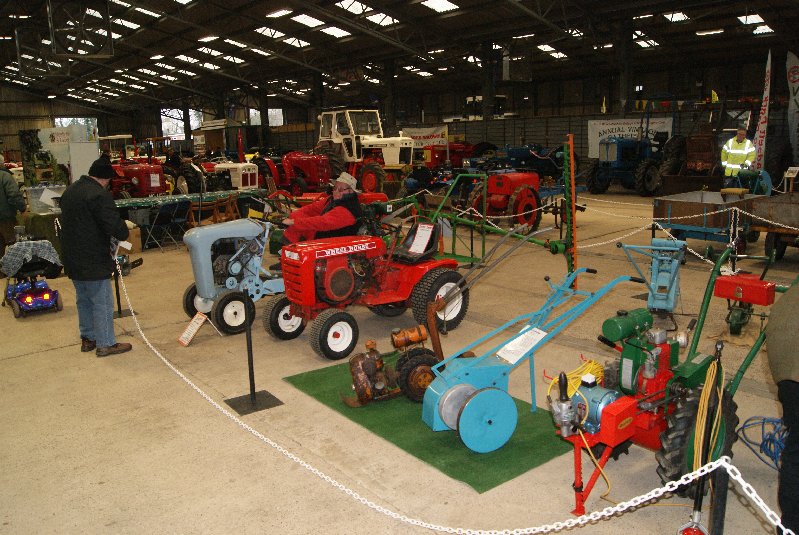
The video below is just a walk about with the video camera – edited to two and a half minutes. Plus some photographs of exhibits.

by alan

Quiz: Guess the company…#3

September 18, 2024 in Articles, Club News

This is the third in a series of ‘Guess the company’ quizzes – and is more difficult than the first two and the clues are not in date order. Can you determine which single company the clues refer to?

The answer is at the bottom of the page.

Past quizzes can be found here: First Quiz and Second Quiz

Which single company do all these clues point to?

Clue 1: This UK company made most of their own gardening machines and by 1987 30% of production was sold abroad.

Clue 2: A successful company, the assets included a full-size helicopter in a brown livery with the company name.

Clue 3: The company started small in a former warehouse in High Wycombe in the 1960s, but nearly twenty years later it was eventually bought in a £9m deal.

Clue 4: In 1985 an unorthodox ride-on mower was produced. It was called the Clipper and had an engine protruding at the front. It had chain-driven small front wheels and strange steering. It was a short-lived model!

Clue 5: A slight deviation from garden machines, in the 1980s the company also advertised a range of small groundwork machines for DIY excavation projects. These included two four-wheel dumpers and a small digger.

Clue 6: Several small garden tillers/cultivators were made including the Gemini, Imp and Groundhog. In 1973 the Imp had a 15″ working width, a 2.5 hp Aspera engine and a centrifugal clutch, and cost £60+vat.

Clue 7: Although a range of pedestrian mowers was made, in the 1980s rebranded Ibea mowers started to be sold by the company. These included the Rotastripe (rear roller), County and Enduro (4-wheel).

Clue 8: The company is best known for their range of ride-on mowers, the early/vintage ones are popular and have a following of enthusiasts. These include the early W series models which were petrol-driven, in 1984 a diesel model was added. The W series was replaced by the S and T series.

Scroll down for the answer……

All the clues point to the company Westwood Engineering Ltd.

The company started in the late 1960s at Fryers Works, Abercromby Avenue, High Wycombe. Around 1973 they moved to Plympton, Devon.

The company originally manufactured many pedestrian lawnmowers and tillers, including the Sabre mower range and the Westwood Imp 2.5 hp cultivator with a 15″ working width. Westwood also listed the Rockwell electric hedge trimmers.

Westwood got into the ride-on mower market in 1971 with the launch of the Lawnbug. To have larger lawn tractors, Westwood sold the American Dynamark tractor range in the 1970s. However, by the mid-1970s the more familiar tractors that we associate with the W-series were manufactured by Westwood.

The Westwood tractors can be found worldwide, and in the 1980s were rebadged as Ginge in Denmark and Agro-Trac in Austria. They also had cosmetic changes and rebadged as the Honda-powered Lawnmaster made by Bartram Mowers Ltd in Norwich.

In 1985, Ransomes, Sims & Jefferies purchased Mountfield for £9m.

Away from horticultural machines, the Westwood company advertised the ‘Muck Shifters – clue number 5 and illustrated below. These were diggers and dumpers for small projects – such as in a back garden where larger machines couldn’t gain access. The ‘Muscleman’ was a small digger that could dig down to 7′ deep; the ‘Muck Truk’ was a 46″ wide 4-wheel dumper that could carry up to 400KG; the ‘Skip Truk’ was a high-lift version of the Muck Truk that could lift high enough to tip into a skip.

Westwood Clipper (Clue 4), and the Muck Shifters with the Muscleman digger and the Muck Truk (Clue 5)

by alan

The Hare And The Tortoise

April 26, 2024 in Articles, Club News

There are many horticultural items that we now take for granted. These include secateurs with their introduction in the early 1800s (read more about them here), and rotary mowers with the early Rotoscythe being described as unorthodox with the suggestion that it would never catch on (see Rotoscythe in the gallery).

With newly launched machines the marketing folk had a great deal of input when thinking up names, slogans, icons, logos, and advertising. How about Howard with their clever palindrome word ‘rotavator’, or Wheel Horse with ‘Get a Horse! Wheel Horse Of Course!’.  

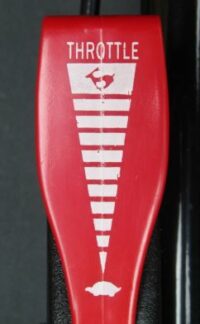
We also take for granted a lot of instructions, icons and safety stickers on both old and new machines and which we easily understand these days. But there’s one that we all have seen but that I cannot find the source for – when did the hare & tortoise symbols, depicting fast and slow, first appear on machinery throttle controls?

The hare and tortoise symbols, possibly inspired by Aesop’s fables although in that scenario the steady tortoise wins the day, are popular on lawnmowers but did they also appear on other machines first? And were the rabbit and hare symbols a home-grown idea or imported from the USA, Europe or China, or even an invention by an engine manufacturer? Does anybody know?

When did the first Hare & Tortoise throttle control symbols first appear?

by alan

Quiz: Guess the company…#1

February 18, 2024 in Articles, Club News

From the eight clues can you name this famous company?

Since the December quizzes are always popular, here are some clues to pass a few minutes and work out the company name. The answer and a more detailed explanation of the company at the bottom of the page.

Which single company do all these clues refer to?

Clue 1: This company started to manufacture their machines in the UK in 1964, with the first adverts pricing the models around £35. The machines were a success and the company was acquired by a much larger entity in 1968.

Clue 2: The machines they produced were ideal for use on bankings, gradients, orchards, and other grassed areas.

Clue 3: The first models had two-stroke petrol engines, but in 1969 electric-powered models started to be introduced – these were ideal for the domestic garden where a power supply would readily be at hand.

Clue 4: One particular colour is usually associated with these machines, but early models were blue.

Clue 5: Models used the mulching principle, but in 1979 an electric-powered model was launched that was capable of collecting the grass clippings in a rear fabric grass bag. This model was advertised on television.

Clue 6: This company also produced electric-powered small cylinder mowers in the 1970s, and professional cylinder mowers in the 1980s, although the professional models were just rebadged Norlett machines.

Clue 7: From the late 1970s, a range of 4-wheeled rotary mowers were advertised. Many of these models used steel decks rather than the polymer material which the company is famous for. The Lawnchief, which did have a polymer deck, was a very popular rotary model with a 16″ cutting width and a 3.5 hp Tecumseh/ B&S engine or electric power.

Clue 8: Through the years model names have included the Contractor, Professional, Pilot, Minimo, Hovervac, Sprinter, Lawnlady, Chevron, and Ventura, to name just some.

Scroll down for the answer……

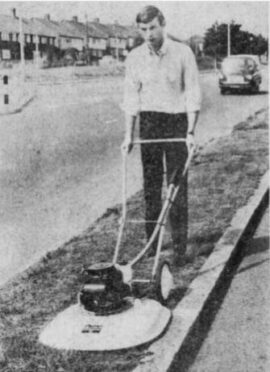
This 1969 photograph shows a Flymo, fitted with a wheeled undercarriage, being used to mow roadside verges.

The eight clues all point to one company which is Flymo.

Flymo started producing their hover mower range in 1964 at a factory in Newton Aycliffe, County Durham. Just four years later, in 1968, Flymo was bought by Electrolux. The Flymo range has been successfully developed and expanded over the decades.

The initial Flymo had a 2.5 hp 2-stroke Aspera engine and a 19″ hardened steel blade within a tough plastic hood. The ‘Professional’ version gained a power increase to a 4 hp engine. Other petrol engines in the hover mower stable have included Briggs & Stratton, JLO, Tecumseh, and Kawasaki.

A huge amount of electric hover mowers have been available. These have been staggeringly popular and cover a wide range of options, these include collectors such as the DXE which was launched in the late 1970s (clue number 5) and was advertised on TV. The DXE could either leave the clippings behind or collect them in a fabric grass bag that hung between the handles. In the 1980s, the Sprintmaster range could also collect grass clippings. The 1990s Hoverstripe models gained rear rollers. The smallest electric hover mower was from the Minimo range with a 10″ cutting width.

Flymo also produced a range of domestic cylinder mowers in the 1970s (clue number 6), they were called Lawnlady and Princess. These were very basic machines with small-sized cutting cylinders. In the 1980s, Norlett Precision cylinder mowers were rebadged as Flymo.

A large range of four-wheel rotary mowers complimented the hover range. They started in the late 1970s and covered many cutting widths, engine choices, push or self-propelled, and some early models that were front-wheel drive.

by alan

VHGMC Machinery Log Sheet – Download

January 17, 2024 in Articles, Club News

Here we are at the beginning of a new year and it won’t be that many weeks until the shows and events start. The first main event is Tractor World at the Three Counties Showground at Malvern on Saturday 24th and Sunday 25th of February – more information: https://tractorworldshow.co.uk/

If anyone needs a log sheet for their machines for any show – whether a main event or just a local show – then they can be downloaded from the VHGMC.

The VHGMC log sheet can be either filled in online and then printed, or can be downloaded to your computer.

The logsheets can be found in the member download section at: https://vhgmc.co.uk/member-downloads/vhgmc-log-sheet-download/

Often members of the public will spend more time looking at an exhibit if there’s a log sheet that provides more than basic information. I recall watching members of the public perusing the horticultural exhibits at Newark tractor show a few years ago, the exhibits with interesting log sheets with date of manufacture, place of origin, a bit of background, and perhaps a story to tell, held the attention of the viewer far longer than those that just showed a basic machine model and name. We also saw that people take a photo of a log sheet as well as the machine it’s attached to. Remember that you can always add a page or two of restoration photos or extra information to go with your log sheet.

Horticulture Display at Malvern 2016

by alan

Quiz 2023

November 25, 2023 in Club News

Here are twelve questions for a short quiz.

These very random questions relate to horticultural items; technical knowledge is not required but a bit of guesswork might be useful.

A pencil and paper is handy to write down the answers.

As always, the answers (which are sometimes much longer than the questions) are at the bottom of the page.

Questions:

Q1: What colour were Dixon machines in the UK?

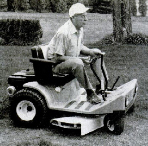
1: An easy question to start with: All sold in the UK, the vintage Dixon ZTR (zero turn mowers) and the Ford and Homelite ranges of lawn and garden tractors used what paint colour?

A: Blue
B: Green
C: Yellow

Q2: Wolf rechargeable tools?

2: In the 1970s, Wolf Garden Tools were advertising their Power Pack System. This consisted of a rechargeable battery that could be used with a range of attachments – a very popular system used by major manufacturers today but appears not to be a new idea as Wolf was advertising it fifty years ago. Items were a shrub trimmer which could have a long handle attached for also being a grass trimmer, and a 35cm double-sided hedge trimmer. A third item that used the same rechargeable battery was also sold – but what was it?

A: Torch
B: Powered secateurs
C: Garden sprayer

Q3: Who did Allen buy in 1983?

3. After Flymos’ hover mower patent ran out, many manufacturers started to produce similar machines. Allen Power Equipment Ltd, which is known for making numerous models of horticultural machinery, eventually included hover mowers. In 1983, which manufacturer of hover mowers did Allen purchase?

A: Crown
B: Flymo
C: Black & Decker

Q4: What did Westwood sell?

4. Before starting to manufacture their Gazelle lawn and garden tractors in the 1970s, which American-made lawn tractors did Westwood Engineering Ltd import and sell in the UK?

A: Countax
B: Wolf
C: Dynamark

Q5: Which decade?

5. Electric strimmers/trimmers seem to have been around for a long time and early domestic models have been made by Black & Decker, Qualcast, Toro and AL-KO. But in which decade did Flymo decide to join the game and introduce its first electric trimmers? The models were the Mini-Trim and the Multi-Trim. And for an extra bonus point, can you name the exact year?

A: 1960s
B: 1980s
C: 2000s
……………………..and in which year?

Q6: What did Zundapp make?

6. The German company Zundapp made a range of motorbikes, scooters, microcars, and outboard motors that were sold in the UK in the 1950s and ’60s. But in the 1970s they also made which horticultural item that was sold in the UK?

A: Lawnmowers
B: Woodchippers
C: Hedgecutters

Q7: What colours are Bolens machines?

7. Starting in 1959, Bolens lawn and garden tractors and rear-engine riders have been available in the UK. But what colour schemes have they been painted?

A: Red and white
B: Gold and white
C: Green and white
D: Green and Yellow

Q8: What was the Huff-N-Puff?

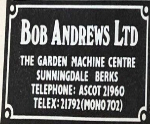
8. Bob Andrews Ltd, The Garden Machine Centre, Sunningdale, Berkshire retailed a varied range of labour-saving machines. These included the popular Cyclone lawn spreader, the Spintrim lawn edger, and the Spurspike lawn aerator (it had a bucket at the front which could be filled with stones or sand etc to give added weight). In the late 1970s, Andrews sold a machine called the Huff-N-Puff, but what was the Huff-N-Puff ?

A: A petrol-powered outdoor vacuum that could suck up leaves and blow away litter.
B: A handheld electric leaf blower that could convert to suck up leaves into a barrow or trailer.
C: A pedestrian-pushed rotary brush that created a blowing effect as it swept.
…..Three intriguing answers above, but which one seems most likely?

Q9: What was the Farmer 300B?

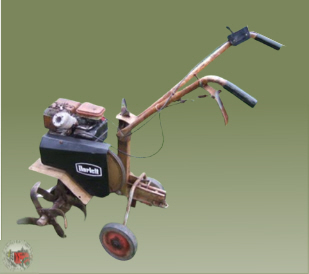
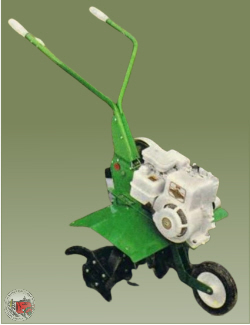
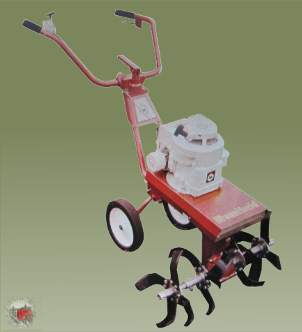
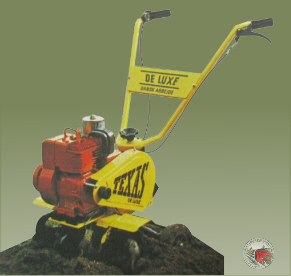
9. The AL-KO Farmer 300B, Texas TV3, and Mountfield M1 Gardener are all examples of what type of machine?

A: Strimmers
B: Garden cultivators
C: Powered barrows

Q10: What year did Honda launch their mowers in the UK?

10. In which decade did Honda launch their first range of lawnmowers in the UK? And for a bonus point can you name the year?

A: 1960s
B: 1970s
C: 1980s
……………………..and in which year? Have a guess!

Q11: What was Spearwells’ lawn rake called?

11: In the late 1960s, Spearwell Tools Ltd (a combination of the companies Brades, Elwell and Spear & Jackson) were advertising a hand rake that was used for scarifying a lawn – it had curved tines (as in the image). This tool was pushed and pulled through the lawn to remove dead and matted grass and thatch. What was this lawn rake called?

A: The Scrake
B: The Moss-Boss
C: The Thatcher-Catcher

Q12: How much did this Texas hosepipe cost in 1980?

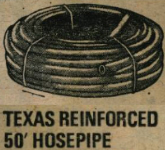
12: We probably all remember the DIY superstores called Focus DIY, Great Mills, Do-It-All and Texas DIY; it doesn’t seem that long since we were shopping in them. The domestic garden machines and products they sold are immortalised in archives of newspaper and television adverts. In 1980, Texas DIY was advertising many things including the £14.99 Yeoman Ballbarrow which was a small galvanised barrow with a football-sized sphere instead of a solid tyre – these barrows will now be 43 years old! They were also selling ‘Texas Reinforced Hosepipe’ which came in 50′ lengths. How much did their 50′ hosepipe cost?

A: £3.49
B: £10.99
C: £15.49

Answers:

1: A: Blue. Dixon, Ford and Homelite all used blue as one of their main paint colours although all three also used white/cream for other tinwork and wheels.

2: C: Garden Sprayer. The rectangular-shaped sprayer could hold 3 litres and had a lance and nozzle much like a normal pressure sprayer. Complete with a battery and charger it cost £52 in 1978. The battery could recharge in 40-60 minutes.

3: A: Crown. Allen purchased Crown Horticultural Equipment Ltd, manufacturers of 2-stroke, 4-stroke, and electric hover mowers, in a £500,000 deal in May 1983.

4: C: Dynamark.  Westwood sold the USA-made Dynamark lawn tractors in the UK in the 1970s. The range included the 32″ cutting width D32R, 36″ D36R, and D36E and D1036E with electric start. There were also rear-engine rider models, though none appear to have survived in the UK – but the top-spec 8/36E with electric starter and headlights was £365 in 1973. For answers A and B, neither are USA makes, Countax being UK and Wolf being German…although Wolf did sell USA Yard-Man riders and lawn tractors rebranded as Wolf in the UK in the 1970s.

5: B: 1980s (1987). Flymo introduced their first electric strimmers in 1987. The models were the Mini-Trim and the Multi-Trim. The Multi-Trim could be converted to a lawn edger by twisting the cutting head. With an investment of £500K, the two models had taken three years to develop.

6: A: The German company Zundapp branched out into making lawnmowers. Several models of their two-stroke and electric-powered mowers were advertised and sold here in the early 1970s, but none seem to have survived. The mowers had yellow mower decks, red engine covers, and chrome handles.

7: A, B, C, and D: All the answers are correct. To mention a few: the Husky 800 and some Ride-a-matics were painted gold with white wheels; the early Ride-a-matics were green with yellow wheels; the Estate Keeper and Lawn Keeper were white with red wheels and detailing. Later Bolens were white and green.

8: A: The Huff-N-Puff was a petrol-powered pedestrian-pushed vacuum leaf collector – a mini Billy Goat vacuum for the smaller garden. It sucked the leaves or debris into a rear grass bag that hung from the handles. An optional wand (a flexible pipe that attached at the front end) enabled suction in confined spaces; the wand could also be attached at the rear, instead of the bag, and then it would be able to blow puddles off driveways and paths or “dislodge stubborn litter from shrub beds”. The Huff-N-Puff was £199+vat in 1979.

9: B: Garden Cultivators. In the 1980s, the AL-KO Farmer cultivator was available as a 3.5hp petrol or 1000-watt electric model; the Texas cultivators were advertised with 3hp – 5hp Briggs & Stratton engines, and the Mountfield M1 Gardener was shown with 3.5hp and 4hp Briggs & Stratton engines.

10: B: 1970s (1978). Honda launched their first mower, the rotary HR21, in the UK in August 1978.

11: A: The Scrake. Spearwells’ lawn rake was called the scrake – a portmanteau of the words scarify and rake. However, I think they should have called it the Moss-Boss, they really missed a marketing trick there. In 1968 the scrake was priced at £2.13s.6d – but the Moss-Boss name would have commanded a greater price.

12: A: £3.49. 50′ of reinforced hosepipe from Texas DIY in 1980 cost a bargain £3.49, and had been reduced from £3.99. Currently, in 2023, B&Q are selling a similar product for £19.95, I guess it’s all relative.

Phew! They took some compiling!


by alan

The Cultivator Magazine – April 2021

April 17, 2021 in Club News

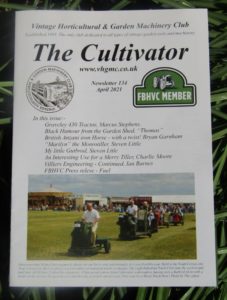
Landing on VHGMC subscribers doorsteps shortly will be the April issue of ‘The Cultivator’.
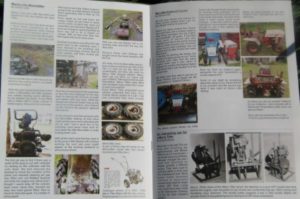
This issue contains articles about the Gravely 430 tractor from Marcus Stephens, the British Anzani Iron Horse from Bryan Garnham; Gutbrod tractors from Steven Little, and part four about the Villiers Engineering company from Ian Barnes. Plus the events diary, classified adverts, and more. 

Members who have paid their yearly subscriptions can log in and download a digital version from the Members Download tab at the top of the page. 


by alan

2021 VHGMC Calendar

January 1, 2021 in Club News

There is a new 2021 VHGMC Calendar available for download. This has been created by Robert Page and contains some brilliant archive photographs.

The calendar can be downloaded from the Members Download Page .

A comment can be left in the forum to let us know you have downloaded the calendar.